Expert Insight
Expert Insight: Yumei Feng on Human-Centered Innovation, Healthcare Design, and the Synthesis of Emerging Technology and Visual Art
Curatone Art & Research Journal, Vol. 1, Issue 2 (2026)
Received: June 30, 2026
Accepted: July 2, 2026
Published: July 7, 2026
Keywords: Product Design, Cognitive Science, Healthcare Innovation, Artificial Intelligence, Human-Centered Design, UI/UX, International Art Exhibitions, Jury Board
Abstract: This interview documents the professional and artistic journey of Yumei Feng, a San Francisco–based product designer, artist, and AI innovator. The text investigates the intersection of cognitive science, digital systems design, and technological solutions for global healthcare and wellbeing. Furthermore, it explores the methodology of translating complex enterprise-scale data into empathetic, user-centric interfaces and highlights the role of international creative exhibitions in advancing technological discourse.
As part of Curatone.art’s ongoing research initiative, we feature Yumei Feng — a distinguished product designer, technologist, and digital artist whose work addresses critical, often overlooked human challenges within modern healthcare and emerging technology frameworks. This interview explores how the integration of rigorous cognitive research, strategic design systems, and aesthetic craftsmanship establishes a new standard for creative leadership in the digital era.
Expert Biography
Yumei Feng is an award-winning product designer, artist, and AI innovator currently based in San Francisco, California. She holds a Bachelor of Science in Cognitive Science with a specialization in Design and Interaction, alongside a minor in Marketing, from the University of California, San Diego (UCSD). Practicing at the forefront of digital strategy, Yumei has designed high-impact systems for major global enterprises through Deloitte, leading product transformations for Johnson & Johnson’s healthcare infrastructure and Meta’s data privacy management platforms.
Her forward-thinking designs and technological innovations have earned top honors in numerous global competitions, including the Red Dot Design Award, UX Design Award, A' Design Award, Titan Design Awards, Vega Design Awards, and the first-place prize at the Microsoft Azure Responsible AI Hackathon. As an exhibiting artist, her work has been showcased internationally, including at the 3rd Florence Annual International Art Exhibition, Art Shopping at the Louvre in Paris, and NYCxDESIGN. Yumei also actively contributes to the design community as an expert reviewer and competition judge, evaluating thousands of technological innovations for platforms such as the University of Washington Protothon.
Selected for the Curatone Annual Review 2026 (Academic Print & Digital Edition).
Yumei, your academic foundation is in Cognitive Science with a focus on Design and Interaction from UC San Diego. What impact does the academic study of human cognition, memory mapping, and behavioral psychology have on your practical design skills for products? How does that help you understand the complicated needs of users while developing complex digital interfaces?
My background in Cognitive Science has fundamentally shaped how I approach design. Rather than starting with technology, I start by understanding how people think, make decisions, and behave in different contexts.
Studying cognition, memory, attention, and behavioral psychology taught me that every interface introduces a certain cognitive load. Good design isn't just about making something visually appealing—it's about making information easier to process and interactions feel intuitive.
This foundation influences my work in two key ways. First, it helps me understand what truly motivates people to use a product. People's decisions are driven not only by logic, but also by emotion, habits, and context. This is especially important in healthcare, where users are often stressed or overwhelmed.
Second, it allows me to simplify complex systems into experiences that match how people naturally think. Whether I'm designing enterprise AI platforms or healthcare products like Lumi, my goal is always to reduce cognitive burden and help users focus on what matters most.
For me, cognitive science isn't just an academic background—it's the foundation of how I approach every design problem. It reminds me that technology should always adapt to people, never the other way around.
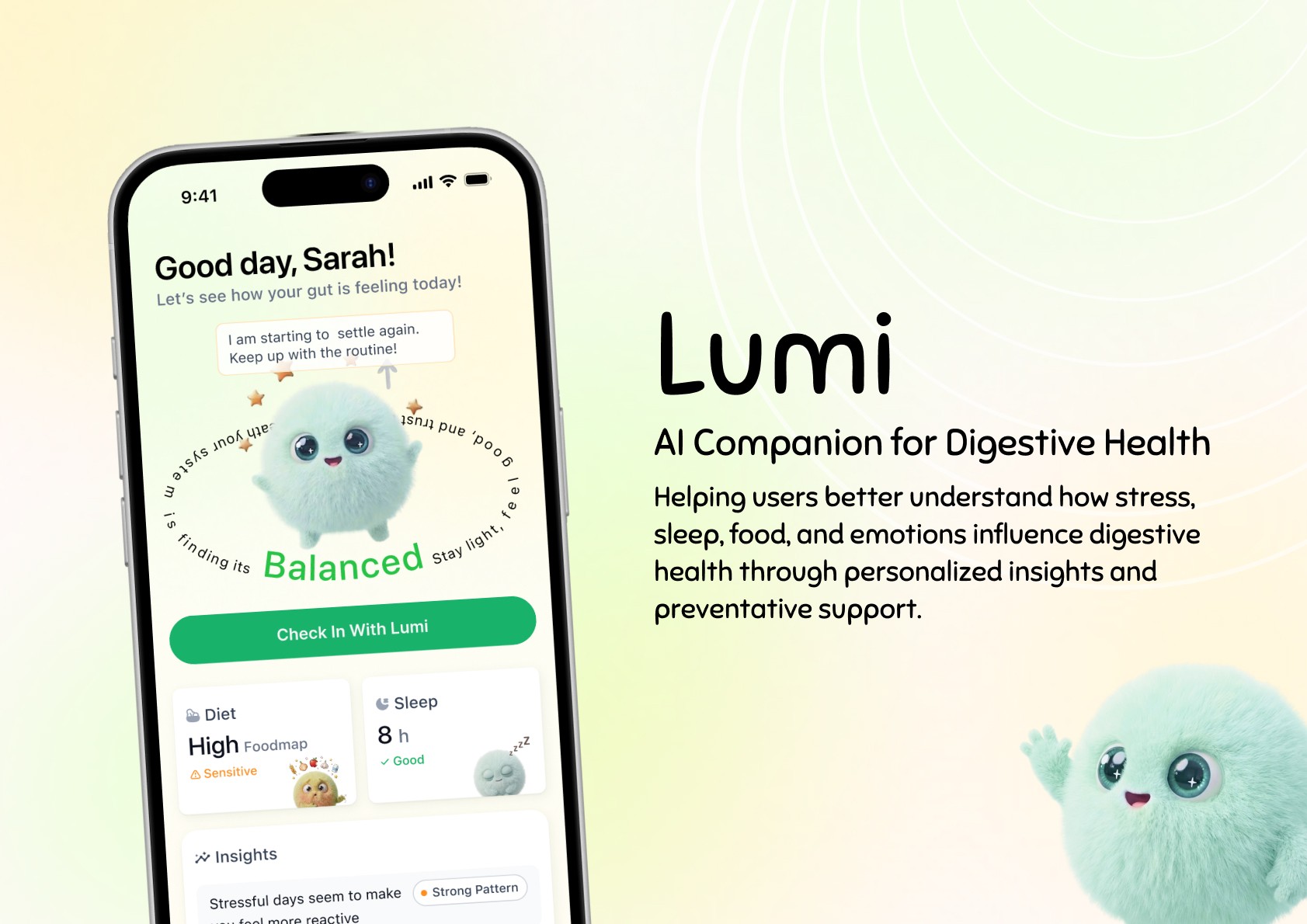
Lumi. An AI-powered companion for people living with digestive disorders, combining symptom tracking, personalized health insights, and empathetic conversational support. Lumi empowers users to better understand their health patterns while reducing the emotional burden of managing chronic conditions.
You have a rich portfolio of successful redesigns in large companies like Johnson & Johnson and Meta through Deloitte. For example, you helped to consolidate J&J's sales dashboard from 22 boards to 5, resulting in a dramatic increase in Net Promoter Score (NPS) from -17 to 76. Which approach do you use in order to transform big, confusing data structures of an enterprise into user-friendly interfaces?
Whether I'm designing enterprise software or consumer products, my process always begins with understanding human needs. In enterprise design, that often means identifying the users' core jobs to be done—what they are trying to accomplish, what decisions they need to make, and what information actually helps them succeed.
When we redesigned Johnson & Johnson's sales dashboard, the challenge wasn't a lack of data—it was an abundance of it. Rather than jumping straight into interface design, we spent the first several weeks interviewing stakeholders and users to understand which metrics truly influenced their daily work and decision-making.
Those insights became the foundation for how we structured the entire product. Instead of displaying everything, we prioritized the most meaningful information, reduced unnecessary complexity, and organized the experience around users' workflows rather than the underlying data structure.
I believe that's the key to designing complex systems. Great enterprise products aren't created by adding more features—they're created by understanding what matters most to users and designing around those priorities.
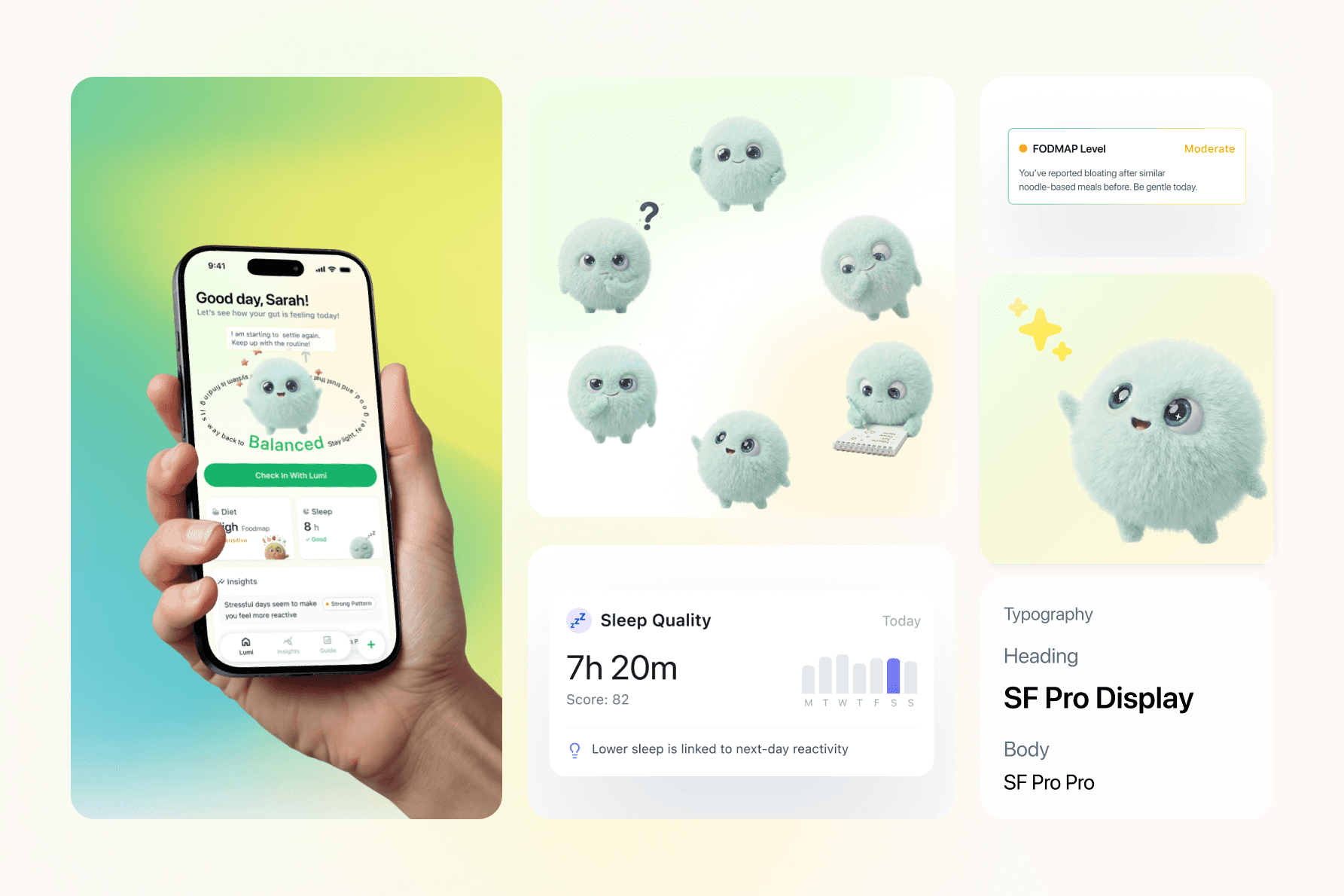
Lumi. An AI-powered companion for people living with digestive disorders, combining symptom tracking, personalized health insights, and empathetic conversational support. Lumi empowers users to better understand their health patterns while reducing the emotional burden of managing chronic conditions.
You are very passionate about improving patients' lives and well-being by creating tools that will help people to deal with their problems which often go unnoticed. At the same time, you won 1st Place at the Microsoft Azure Responsible AI Hackathon. From your point of view, how should the new technology like AI be developed responsibly to make people's life better, not worse in terms of psychological well-being?
I believe AI should be designed to reduce stress, empower people, and support better decision-making—not replace human judgment or create additional uncertainty. Especially in healthcare, trust is just as important as intelligence.
Winning the Microsoft Azure Responsible AI Hackathon reinforced my belief that responsible AI must be intentionally designed into a product from the very beginning. For me, there are three core principles.
First, safety. AI should operate within clear guardrails, recognize its limitations, and avoid presenting uncertain information as fact.
Second, transparency. Users should understand where information comes from and why the AI is making a particular recommendation. That visibility helps build trust rather than blind reliance.
Third, empathy. Technology should acknowledge the emotional experience of the person using it. While designing Lumi, I realized that people living with chronic digestive disorders often needed emotional reassurance just as much as medical information. That experience reinforced my belief that empathy should be treated as a core design principle rather than an optional feature.
Ultimately, responsible AI is about designing systems that people can trust. When safety, transparency, and empathy are embedded into the experience, AI becomes a collaborative partner that helps people make more informed decisions while improving their overall well-being.
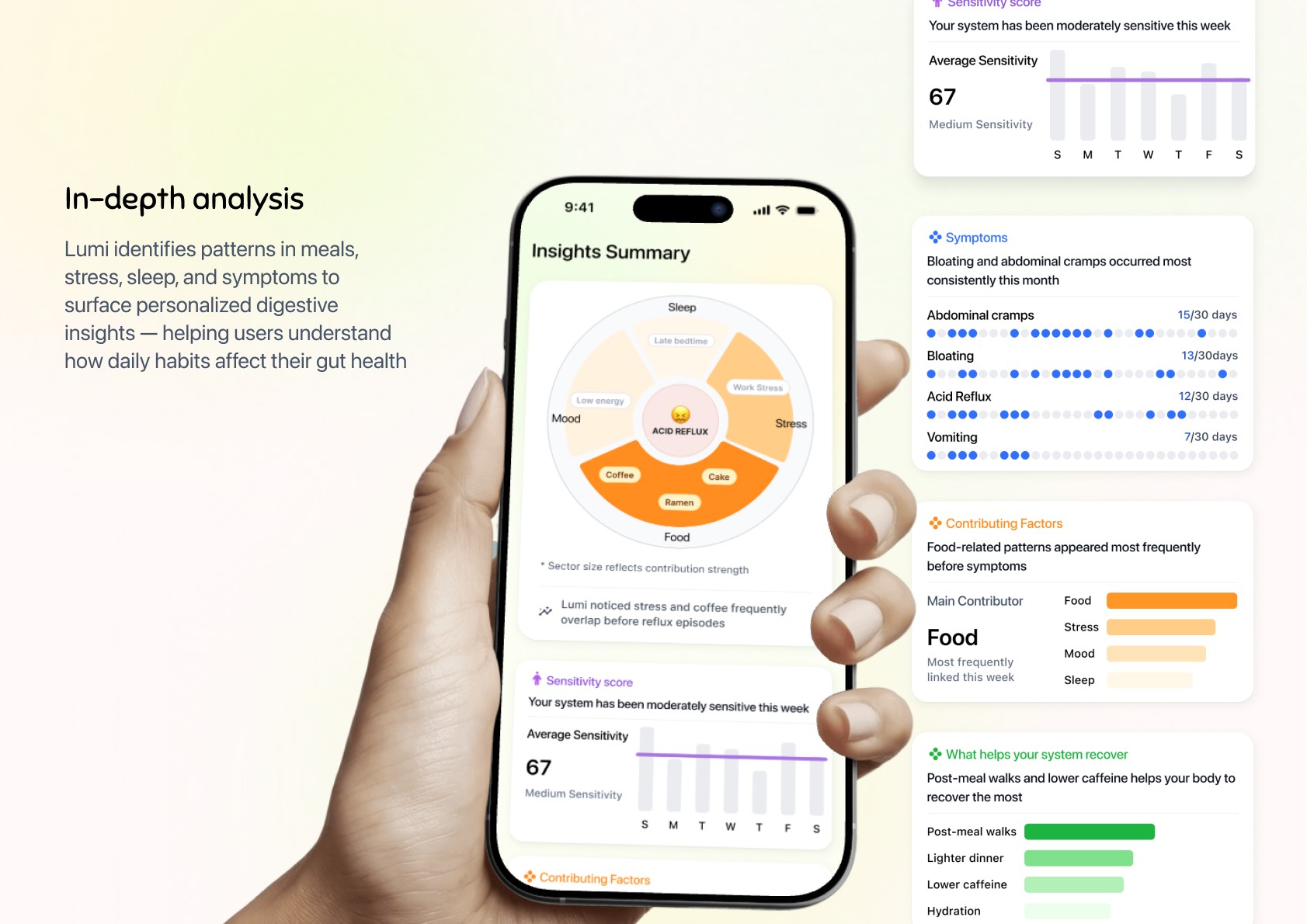
Lumi. An AI-powered companion for people living with digestive disorders, combining symptom tracking, personalized health insights, and empathetic conversational support. Lumi empowers users to better understand their health patterns while reducing the emotional burden of managing chronic conditions.
You have a lot of experience working as a judge and reviewer, judging projects from thousands of students at the University of Washington Protothon. Now, you become a member of the Curatone.art Jury Board. How do you assess a submission's craftsmanship and market potential while still appreciating the purely creative concept of the artist?
Serving as a judge has taught me that great work is rarely defined by a single dimension. I try to evaluate every submission from three perspectives: the strength of the idea, the quality of its execution, and the impact it has on its intended audience.
The creative concept is always where I begin. I ask whether the work communicates an authentic point of view or offers a fresh perspective. Originality and intention are often what make a piece memorable.
Next, I look at craftsmanship. Regardless of the medium, I pay attention to how thoughtfully the idea has been executed—whether the composition, technical decisions, and attention to detail reinforce the artist's vision.
Finally, I consider its broader impact. In product design, that may mean usability or business value; in art, it may be the emotional resonance, cultural relevance, or ability to spark meaningful conversations. I don't believe every work needs to have commercial potential, but I do think the strongest works leave a lasting impression and connect with people beyond their first glance.
Ultimately, my goal as a juror is to appreciate both creativity and execution. The most compelling submissions are those where a meaningful idea is brought to life with exceptional craftsmanship and authenticity.

EasyMed. An AI-assisted medication management platform designed to help older adults safely navigate complex medication regimens by identifying potential drug–drug and drug–food interactions. The solution promotes medication safety through an accessible, intuitive interface tailored to the needs of aging populations.
In this age of easily available tools for digital designers, there always arise conflicts between efforts in engineering and user experience. You were confronted with this problem directly when you saved 15,000 engineering hours on Meta's internal privacy platform. Do you have any advice for young multidisciplinary designers trying to convince others about the business value of design?
The rise of AI has changed the role of designers, but I don't believe it has diminished our value. If anything, it has shifted our focus from producing interfaces to solving the right problems.
Today, anyone can generate a screen with AI. What remains uniquely human is understanding users, identifying opportunities, balancing technical constraints, and making strategic product decisions. Those are the skills that create lasting business value.
My advice to young multidisciplinary designers is to always frame design as a business investment, not just a creative exercise. When proposing a solution, ask yourself two questions: What user problem does this solve, and why does solving it matter to the business? The strongest design decisions are those that improve both the user experience and measurable business outcomes.
In my experience, whether redesigning Meta's internal privacy platform or building healthcare products, successful design comes from aligning user needs, business goals, and engineering realities. When you can clearly communicate that connection, design becomes much easier to advocate for because its value is visible to everyone involved.
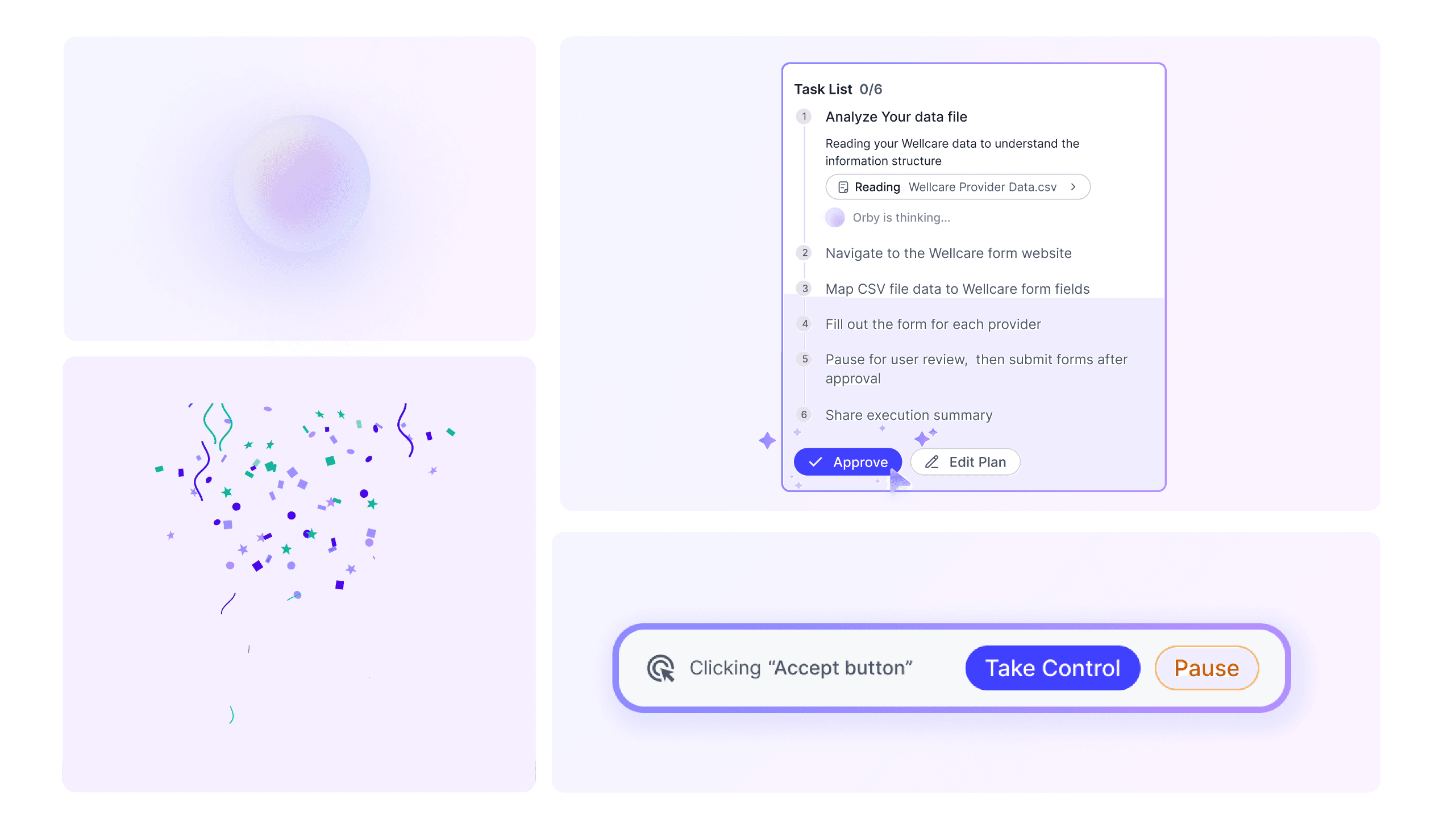
Orby Automation Platform. An enterprise AI automation platform that enables business users to build and manage complex workflows through an intuitive visual interface. The redesign bridged technical capabilities with human-centered design, making sophisticated automation accessible to non-technical users.
Your projects have been exhibited around the world on various prestigious platforms: 3rd Florence Annual International Art Exhibition, Art Shopping at the Louvre in Paris, and NYCxDESIGN. From your professional experience, how does your experience with international art exhibitions benefit your daily practice as a designer?
International exhibitions have been incredibly valuable because they allow me to share my work with a broader creative community and engage in conversations with artists and designers from different backgrounds. For me, exhibiting is not just about presenting finished work—it's about exchanging ideas, receiving new perspectives, and learning how others approach similar challenges.
I've also found these communities to be a tremendous source of inspiration. Seeing how other creatives interpret complex topics through different mediums continually pushes me to think beyond conventional solutions and explore new ways of telling stories and designing experiences.
Those interactions have had a meaningful impact on my own practice. They encourage me to stay curious, experiment with new ideas, and approach problems with a more open and creative mindset. Whether I'm creating a digital artwork or designing an AI-powered healthcare product, I'm constantly drawing inspiration from the people and conversations I've encountered through these international exhibitions.
Ultimately, I see exhibitions as an opportunity to contribute to—and learn from—a global creative community. The exchange of ideas is what helps all of us continue to grow as designers, artists, and innovators.
Editorial & Review Credits
Editor-in-Chief & Interviewer: Elizaveta Akimova
Featured Expert: Yumei Feng
Editorial Review Board:
Xinyue Hope Shen (Award-winning, Cornell-trained landscape architect and design critic with global project experience at SWA Group. Recognized by the National ASLA, IDA, and MUSE Design Awards, and a guest lecturer and critic at UNLV and the University of Houston): "Yumei Feng’s work demonstrates how human-centered design can translate complex healthcare and AI systems into experiences that feel intuitive, trustworthy, and emotionally supportive. Her projects, including Lumi and EasyMed, show a thoughtful balance between cognitive science, responsible technology, and visual craftsmanship, offering a strong model for how design can improve both usability and wellbeing."
Yanwen Hang (Distinguished brand designer, visual strategist, and SAIC alumna currently spearheading global design initiatives for HashiCorp (an IBM company). Winner of multiple Type Directors Club (TDC) Certificates of Typographic Excellence and MUSE Creative Awards Platinum honors, her work has been exhibited across the US, South Korea, and New Zealand): "This interview provides a clear look into the intersection of cognitive science and digital product design, showing how complex data can be structured into intuitive, user-centered interfaces. Feng’s perspective highlights the practical side of responsible AI, illustrating how safety, transparency, and user empathy can be integrated into foundational design principles rather than treated as secondary features."
Olga Bondarenko ( Award-winning designer and photographer (CAPIC, APA), Graphic Design degree (KSADA), Juno Awards photography team, and experienced art curator): "It is always tough to balance on the intersection of artistic freedom and business needs. Yumei is a great example of someone trying to navigate the digitally uncertain times with an unbiased perspective. I believe the article can be relevant for any creative looking to get more professionally established while trying to marry their and their client’s ideas."
This article has undergone an editorial review process by members of the Curatone.art Editorial Board.
How to cite: Feng, Y. (2026). Yumei Feng on Human-Centered Innovation, Healthcare Design, and the Synthesis of Emerging Technology and Visual Art. Curatone Art & Research Journal, 1(2). Retrieved from https://curatone.art/publications/yumei-feng
Research Context & Expert References
This interview is a foundational part of Curatone.art’s ongoing research project: "The Impact of Contemporary Art and Design on Global Social Structures." Our research explores how artistic practices and digital systems design evolve into vital tools for social progress, technological ethics, and community wellbeing. By documenting the insights of multi-disciplinary experts like Yumei Feng, Curatone.art aims to map the critical intersection of technical craftsmanship, cognitive empathy, and responsible innovation in the 21st century.
Selected Bibliography & Academic Sources:
Norman, D. A. (2013). The Design of Everyday Things: Revised and Expanded Edition. Basic Books.
Shneiderman, B. (2022). Human-Centered AI. Oxford University Press.
Cooper, A., Reimann, R., Cronin, D., & Noessel, C. (2014). About Face: The Essentials of Interaction Design. John Wiley & Sons.
Red Dot Design Academy. (2024). International Yearbook of Product and Interface Design: Global Innovation Trends. https://www.red-dot.org/magazine/annual-review-2024
Source: https://www.yumei.design/
Vol. 1, Issue 2 (2026)
DOI: https://doi.org/10.5281/zenodo.21249474

Featured Artists
We provide media exposure on Curatone.art and across social media for selected finalists and winners