Visual Essay
Designing for Unseen Worlds: Ujala (Light in Hindi) and the Practice of Participatory Inclusive Design in Urban India
Curatone Art & Research Journal, Vol. 1, Issue 2 (2026)
Received: June 30, 2026
Accepted: July 2, 2026
Published: July 7, 2026
Keywords: inclusive design, assistive technology, participatory research, visual impairment, urban India, Global South, design pedagogy
Abstract: Visually impaired urban users in India face navigation challenges. The Ujala (light in Hindi) is a portable assisted navigation system designed for visually impaired citizens in Mumbai. It combines a smart cane with a tactile and audio feedback headset. This project moves through iterative prototyping, feedback testing and designing. There is a requirement for inclusive design products and experiences in the global south, pushing a rethinking of assistive technology from the ground up. This visual essay walks through the process and considers what it teaches about designing with rather than for the disabled community of the global south. It also talks about the social dimension of mobility and the social inclusion of each citizen who is a part of society. It shows that everybody desires independence, confidence and safety.
Yuthika Sharma is a PhD student in Curriculum and Instruction at the University of Denver, with a BDes in Product Design from NIFT Mumbai and an MA in Industrial Design from the Savannah College of Art and Design. Her practice spans inclusive design, participatory research, and design education with a focus on India.
Selected for the Curatone Annual Review 2026 (Academic Print & Digital Edition).
The Problem
Today, only 1 in 10 people in the world have access to assistive technology due to the lack of awareness, finances, and resources (World Health Organization, 2024). And 52.3% of people with severe or total visual difficulties in India lack access to the assistive technology (Senjam et al., 2023). In India, visually impaired pedestrians are almost always unable to navigate through streets because they are rarely built with them in mind, with uneven pavement, unpredictable obstacles, and inconsistent signage. There are conversations with visually impaired users that reveal recurring frustrations that the products that are there for them are not customizable.
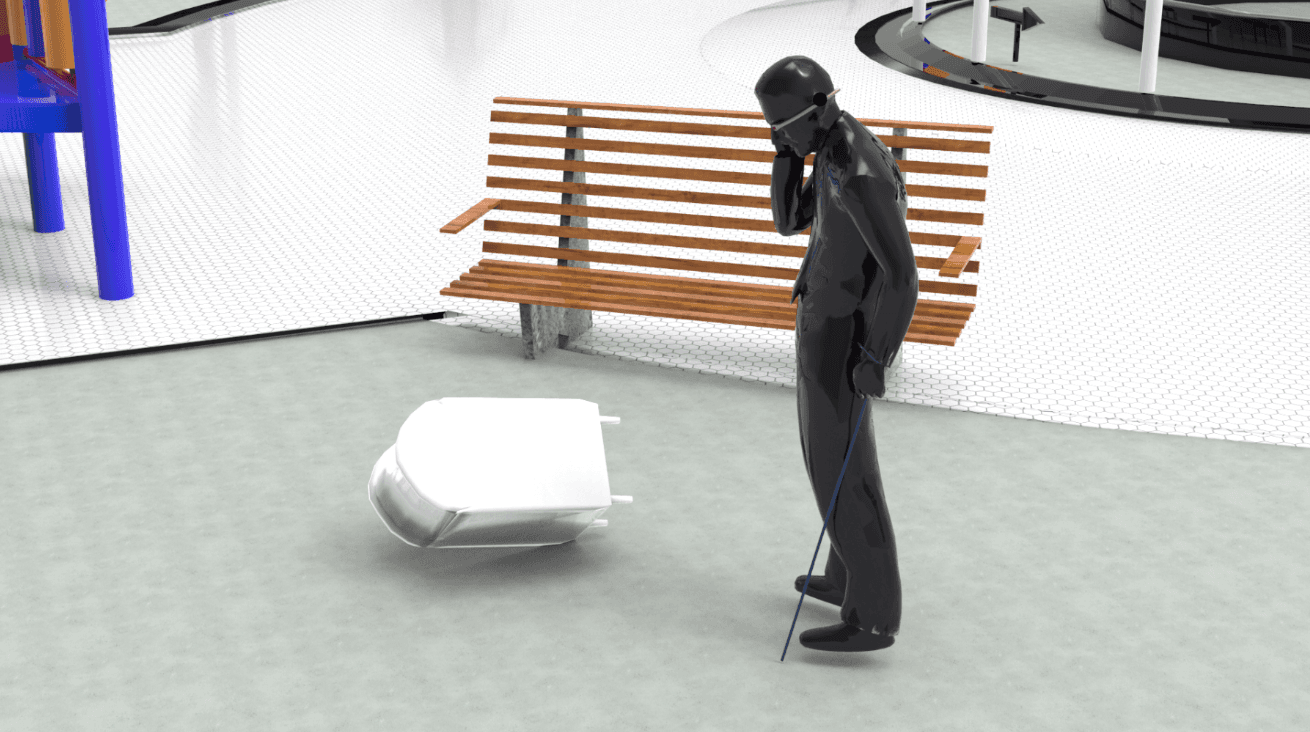
They do not have any community support and are unable to independently lead their lives. It is a lack of products designed around how people move through the world, and how they want to be seen and perceived in public. Visually impaired people want independence, not dependence on other people to get through daily life, but the ability to move through the world on their own terms, included in society rather than set apart from it. Few products are successfully designed for the disabled community with this in mind. Ujala responds with a portable cane and headset system, built through participatory research with the people it serves, for the people, by including the people. (see Figure 1.)
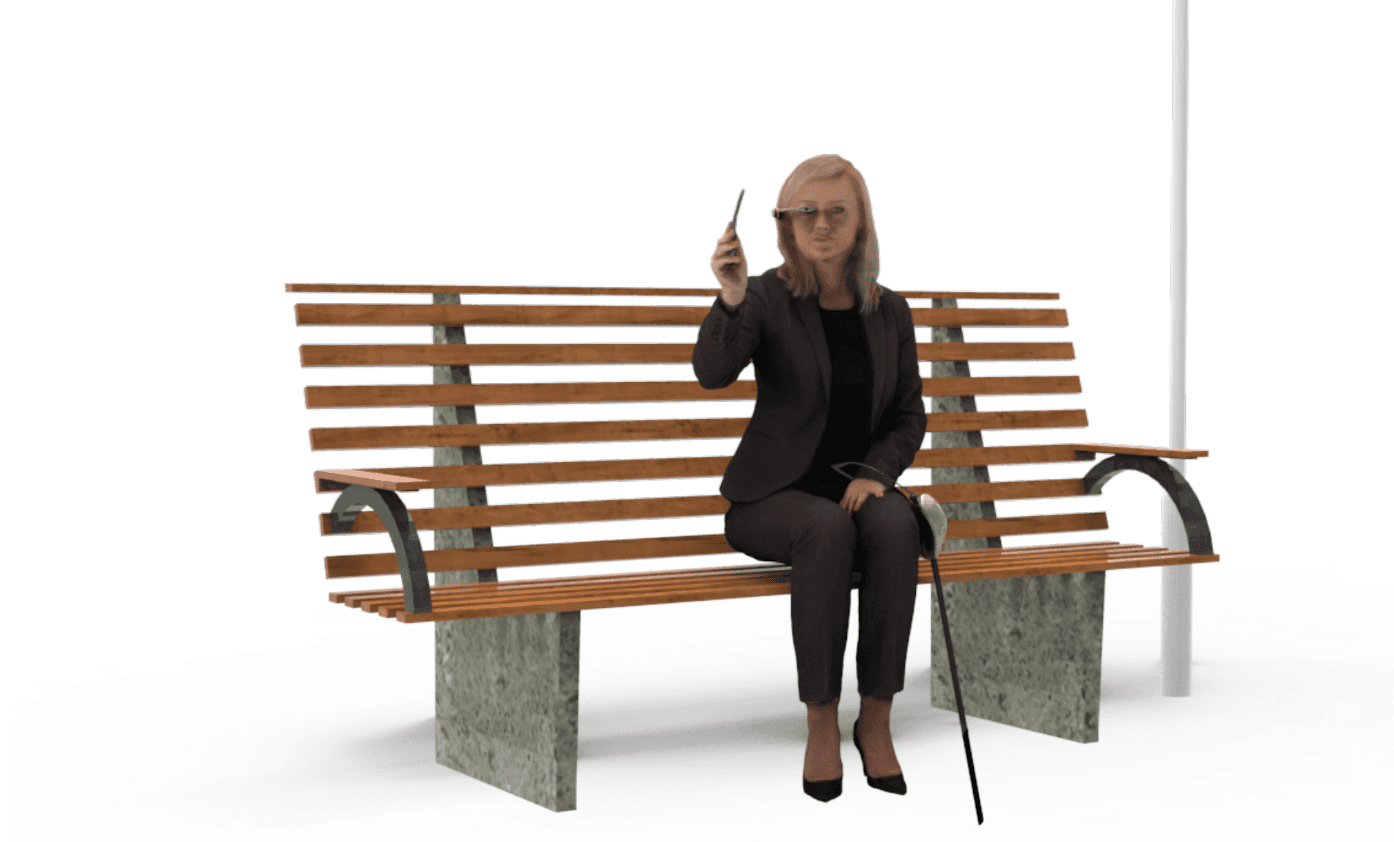
Figure 1. User navigating a public space, illustrating the everyday context that informed the Ujala brief
2. Research Process
Research began with direct conversations with the students and teachers at the Pragati blind school of Mumbai. Instead of starting with an idea already set in mind with the product, device, or experience, I started with understanding what problems these people face, understanding their daily routine, existing coping strategies, and what they need. Participatory research was an important part of this, as I wanted my users to be a part of the process of making the solution. Research combined interviews, observations, and hands-on prototyping and testing with visually impaired participants of this school. The cycle of sketching, testing, and revising based on the feedback of actual users in real time made a large impact on the overall product. These daily conversations also made me realise how socially secluded these people are in society and how we don't even notice this. (See Figure 2.)
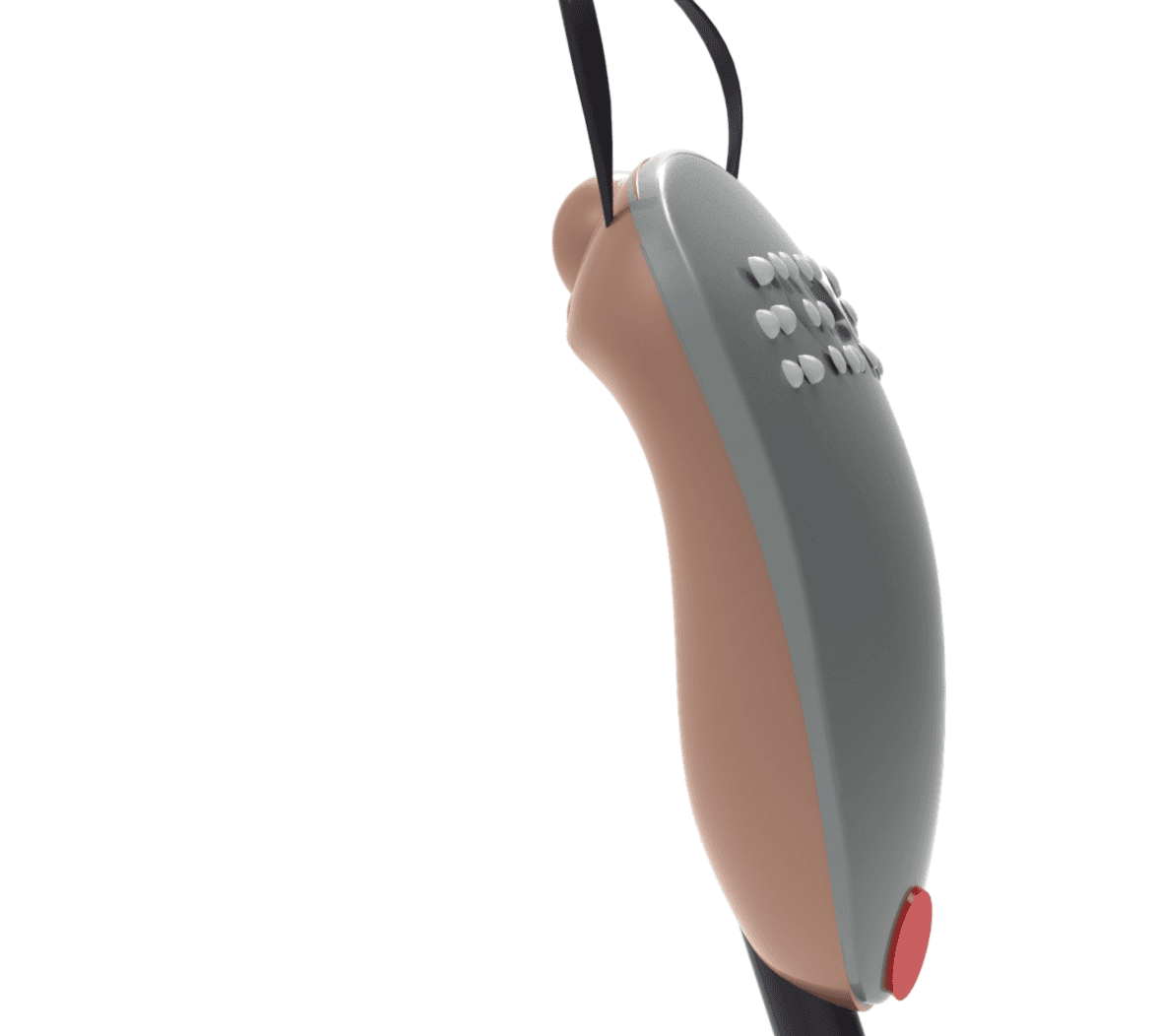
Figure 2. Close-up of the Ujala handle, showing tactile button layout and grip form designed for one-handed use. It shows the braille inscription for the user’s ease.
3. Design Decisions
Ujala, the walking cane, retains the familiar form of a blind walking cane deliberately since the users of the Pragati Blind School value its social recognizability, ease and use of the design. The braille-inspired button layout addresses the need for customization and a tactile, auditory feedback system. Decisions about the grip shape, the overall proportions, and the button placements were tested digitally and verified with actual users in real-life scenarios. The cane can handle immediate physical navigation and emergency response, and the headset, along with the cane, can give real-time environmental awareness and changes. This division between the two products gives a user an overall helping hand while feeling independent and confident out alone. Alongside the cane, a head-worn audio component gives clear information to the user. The headset pairs with a small camera with directional audio feedback processing the immediate surroundings, relying on information through an earpiece audio cue. These audio cues are updated in a local city-wise cloud storage, where all the changes are made immediately. This also connects people who are visually impaired to people like them, and they can support themselves and each other within their community. The idea was that the material and the form should be more about simplicity and not complexity. The aim was not to show a fancy gadget, but to ensure that whatever was added to a basic cane, it made it more legible, durable, and usable by someone who has never seen a product that they're holding. (See Figures 3 through 5.)
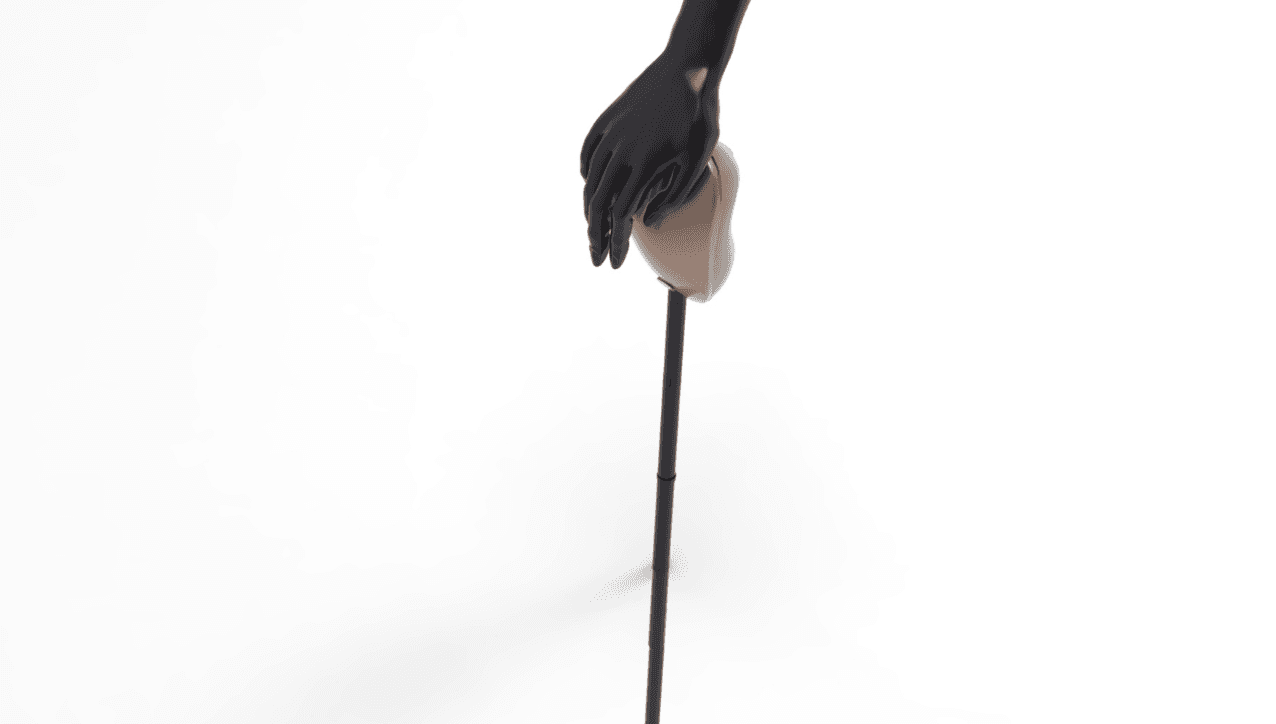
Figure 3. User holding the Ujala cane, demonstrating the ergonomic grip and natural hand position.
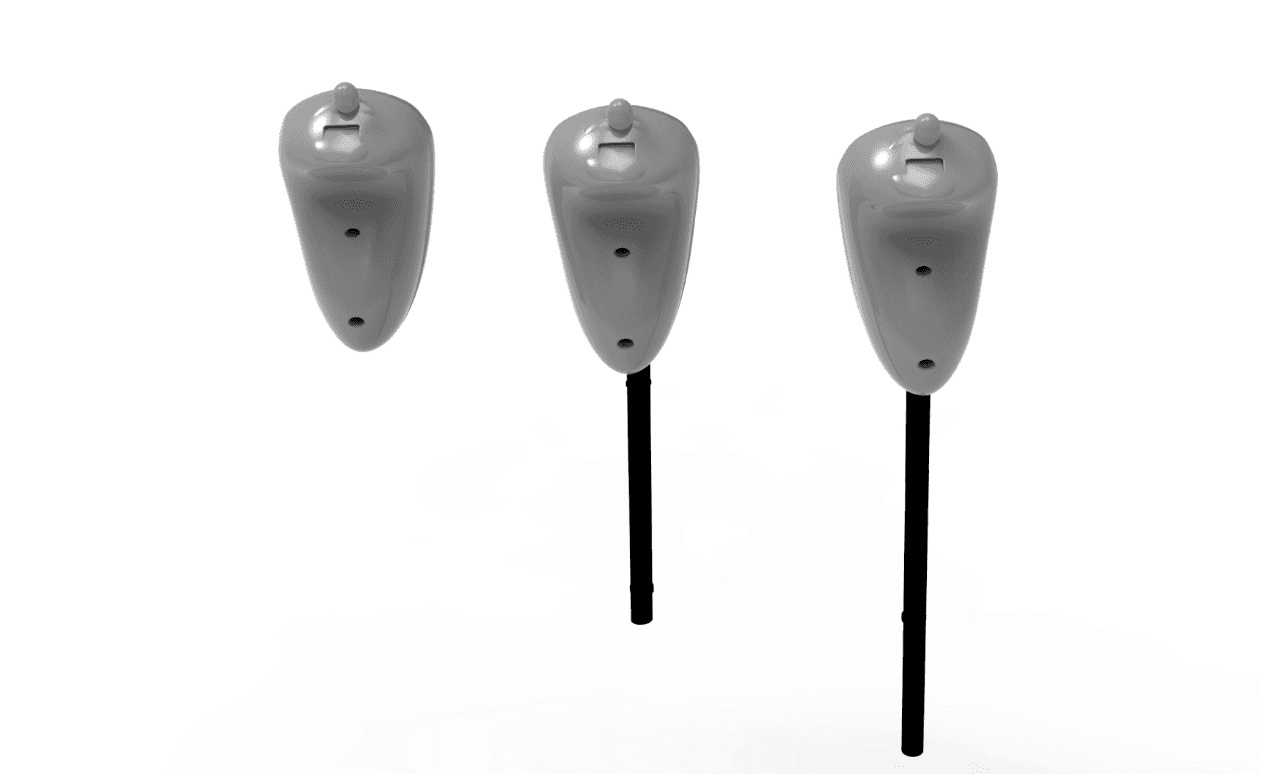
Figure 4. Ujala head-worn audio component, providing directional audio feedback to complement the cane. Shows how the cane when not in use folds inwards, also a size adjustment according to the height of the user.
4. Inclusive Design in the Global South
Working on Ujala surfaced a pattern I hadn't expected going in: most assistive technology marketed in India isn't designed for India. It's adapted, often poorly, from products built for different climates, price points, and ways of moving through public space. This gap matters more than it might seem, because navigation challenges in Indian cities are genuinely different, denser, less predictable, and less consistently maintained than the environments most assistive tech assumes. Sitting with students and teachers at Pragati Blind School taught me that the most useful design insights rarely came from technical research; they came from listening to how people had already adapted to inadequate tools and asking what they'd want instead. That shift, from designing for to designing with, changed not just the final form of Ujala but how I understood my role as a designer altogether. I stopped thinking of myself as the person solving the problem and started thinking of myself as someone translating what a community had already figured out into a workable object. If this project teaches anything, it's that inclusive design in the Global South must start there.
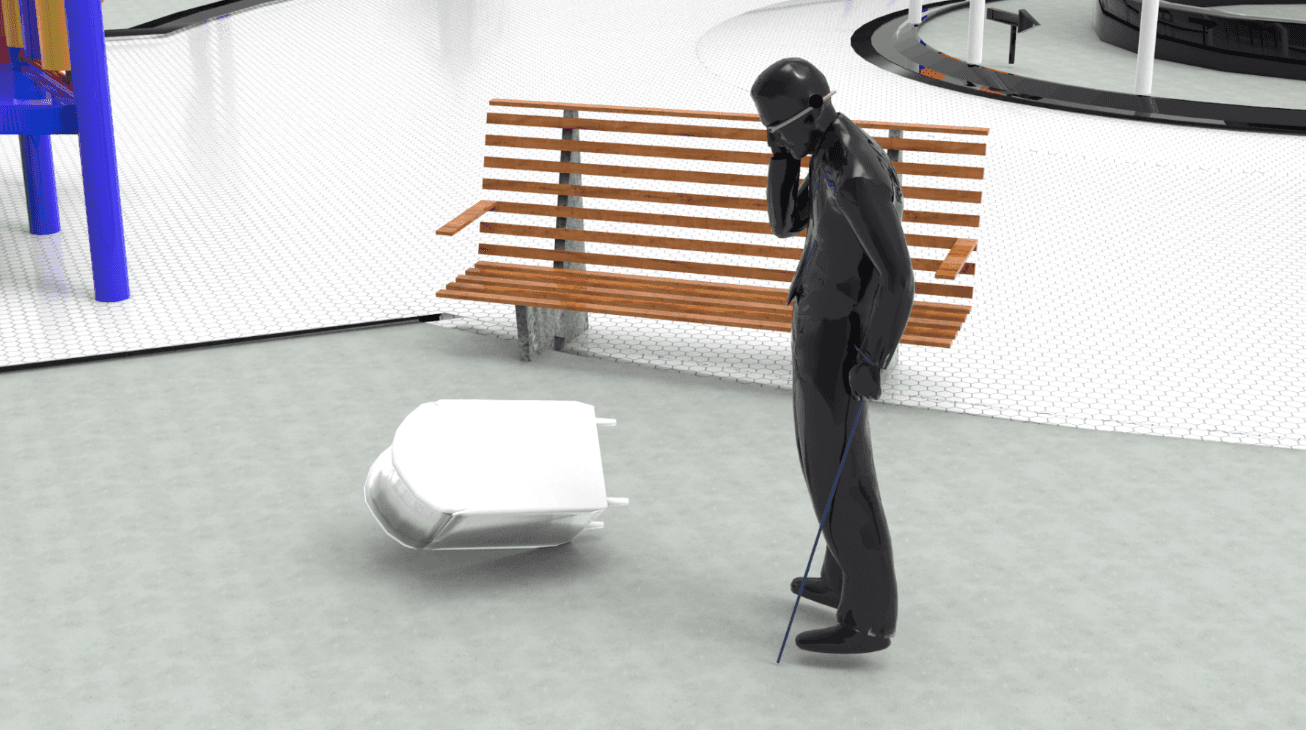
Figure 5. Ujala in a public urban environment, illustrating the system in its intended context of use. The cloud system updates a broken trash can in the walking path of the user.
Vol. 1, Issue 2 (2026)
Editorial & Review Credits
Editor-in-Chief & Internal Reviewer: Elizaveta Akimova (A professional artist and researcher with an M.Sc. in Applied Informatics and a B.A. in Graphic Design. She is an Honorable Member of the International Academy of Modern Arts and a member of the Eurasian Art Union, with her status formally recorded in the Unified Register of Professional Artists): "In this visual essay, the author has beautifully shown the effectiveness of participatory design using Ujala, an interactive system designed for visually challenged people living in urban India. The author uses the case of Ujala as an example of participatory design because it is based on interaction with the community rather than imposing technologies on them. As a result, the system that has been created is highly empathic and functional."
Author: Yuthika Sharma
Peer Review Board:
Yumei Feng (Award-winning product designer, artist, and AI innovator specializing in human-centered design and healthcare tech. Recognized by the Red Dot and UX Design Awards, with work exhibited at NYCxDESIGN and the Louvre, she has served as a competition judge for the UW Protothon): "This work effectively highlights the struggles of a specific user group in the Global South, which is an important and often underrepresented perspective in design. However, the submission would benefit from a more detailed explanation of how the design is specifically tailored to the needs and contexts of Global South audiences."
Natalia Yuresko-Bilous (MFA-qualified artist and educator with 25 years of international experience, a member of the NAAA and Hollis Arts Association, and a founder of art schools in Ukraine and the USA): "The article “Ujala” presents the development of an assistive device for people with visual impairments. Based on real user research, it offers a practical solution in the form of a smart cane and an audio headset designed in collaboration with visually impaired users. The article is clear, addresses an important social issue, and would be valuable for designers, students, and anyone interested in inclusive design."
This article has undergone an editorial peer review process by members of the Curatone.art Editorial Board.
How to cite: Yuthika Sharma (2026). Designing for Unseen Worlds: Ujala (Light in Hindi) and the Practice of Participatory Inclusive Design in Urban India. Curatone Art & Research Journal, 1(2). Retrieved from https://curatone.art/publications/designing-for-unseen-worlds
Bibliography
Costanza-Chock, S. (2020). Design justice: Community-led practices to build the worlds we need. MIT Press.
Senjam, S. S., Manna, S., Kishore, J., Kumar, A., Kumar, R., Vashist, P., Titiyal, J. S., Jena, P. K., Christian, D. S., Singh, U. S., & Kamath, R. (2023). Assistive technology usage, unmet needs and barriers to access: A sub-population-based study in India. The Lancet Regional Health – Southeast Asia, 15, 100213. https://doi.org/10.1016/j.lansea.2023.100213
World Health Organization. (2024, January 2). Assistive technology [Fact sheet]. https://www.who.int/news-room/fact sheets/detail/assistive-technology

Featured Artists
We provide media exposure on Curatone.art and across social media for selected finalists and winners