
Expert Insight
Expert Insight: Yefan Liu on the Intersection of Social Activism and Spatial Design
Curatone Art & Research Journal, Vol. 1, Issue 1 (2026)
Received: December 15, 2025
Accepted: January 10, 2026
Published: January 30, 2026
Keywords: Spatial Design, Social Activism, Contemporary Art
Abstract: This expert insight features a dialogue with spatial designer Yefan Liu, exploring the critical convergence of social activism and environmental design. The discussion analyzes how spatial structures serve as catalysts for social change and the role of the designer in addressing contemporary systemic challenges. By examining the methodology behind Liu’s practice, this article contributes to the ongoing discourse on the ethical responsibilities of design in the public sphere.
As part of Curatone.art’s ongoing research project, "The Impact of Contemporary Art and Design on Global Social Structures," we are proud to feature Yefan Liu - an internationally acclaimed multidisciplinary designer and guest juror for our current exhibition cycle.
Yefan’s work serves as a prime case study for our research, demonstrating how high-level design can transcend aesthetics to address critical environmental and social issues. In this feature, she shares her expert perspective on the responsibilities of the contemporary creator and the rigorous standards required for evaluating international talent in today’s evolving art landscape.
Expert Biography
Yefan Liu is a distinguished multidisciplinary designer and researcher whose work bridges the gap between industrial design and social activism. Currently a Product Designer at iSpring Water Systems (North America), she also founded an independent design studio focusing on animal-related narratives and sustainable material exploration. Her career is defined by a commitment to "emotional sustainability" - creating objects and environments that foster deep connections between humans and their surroundings.
Her professional excellence has been recognized by the world’s most prestigious design institutions, with a portfolio of accolades that includes:
Red Dot Award – Brands & Communication Design (Winner)
IDA Gold Award (International Design Awards)
DNA Paris Design Awards (Winner)
London Design Awards (Gold & Silver Winner)
Muse Design Awards (Platinum Winner)
Yefan’s academic and professional journey at the Savannah College of Art and Design (SCAD) has positioned her as a leading voice in human-centric design. Her projects, such as "A Christmas Letter to Our Homeland" and "Time Letters to the Wild," have been exhibited internationally, cementing her reputation as an innovator who uses design to solve complex global challenges.
Selected for the Curatone Annual Review 2026 (Academic Print & Digital Edition).
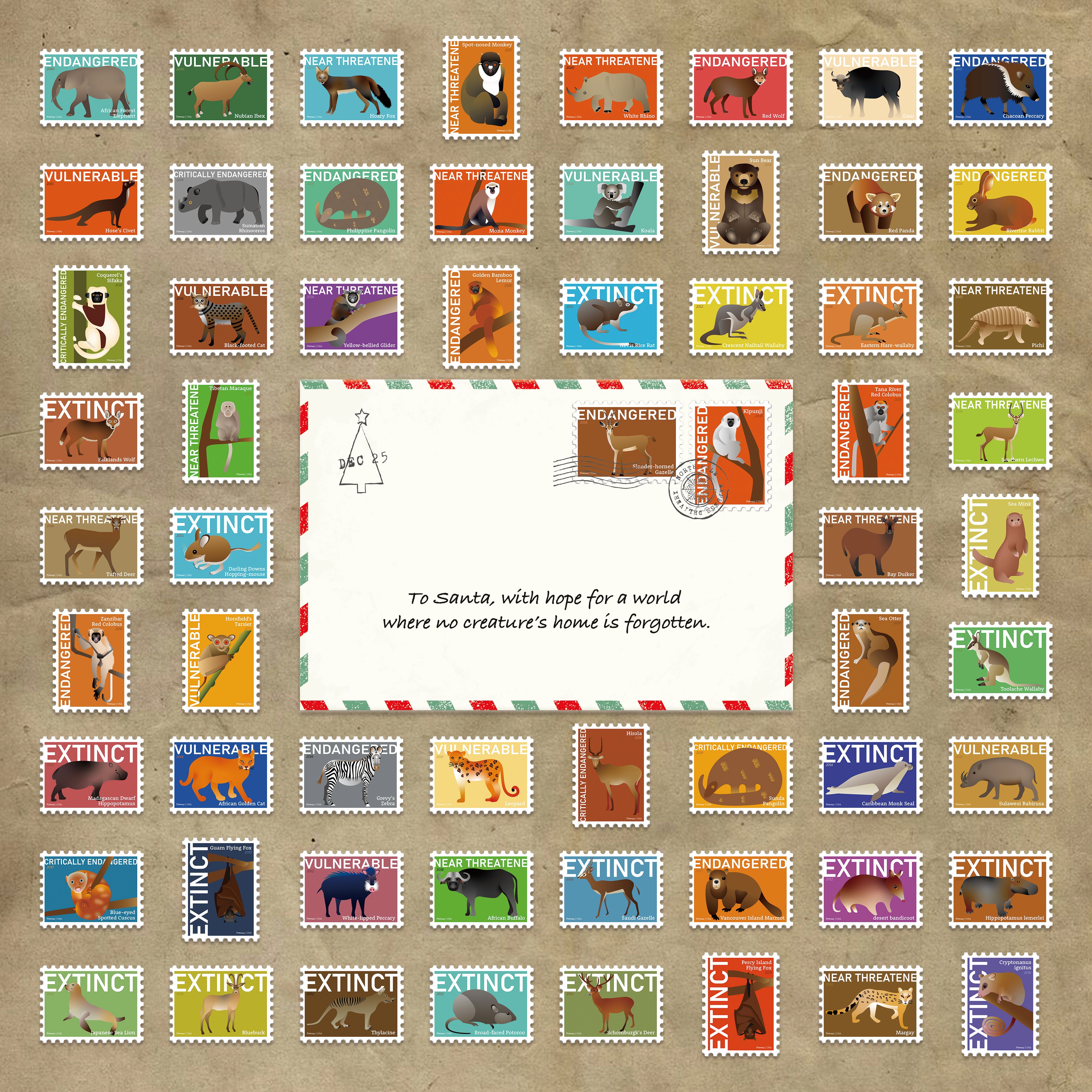
A Christmas Letter to Our Homeland. This work asks a quiet but urgent question: will animals remain alive among us, or exist only as printed symbols of what once was?
Yefan, we are thrilled to have you as a guest juror for our "Light & Shadow" exhibition. Having reviewed international submissions, what was your overall impression of the talent pool? Was there a specific work that challenged your perspective?
I was genuinely impressed by the diversity and emotional range of the submissions. Many works demonstrated a strong understanding of how light and shadow can function not only visually, but narratively.
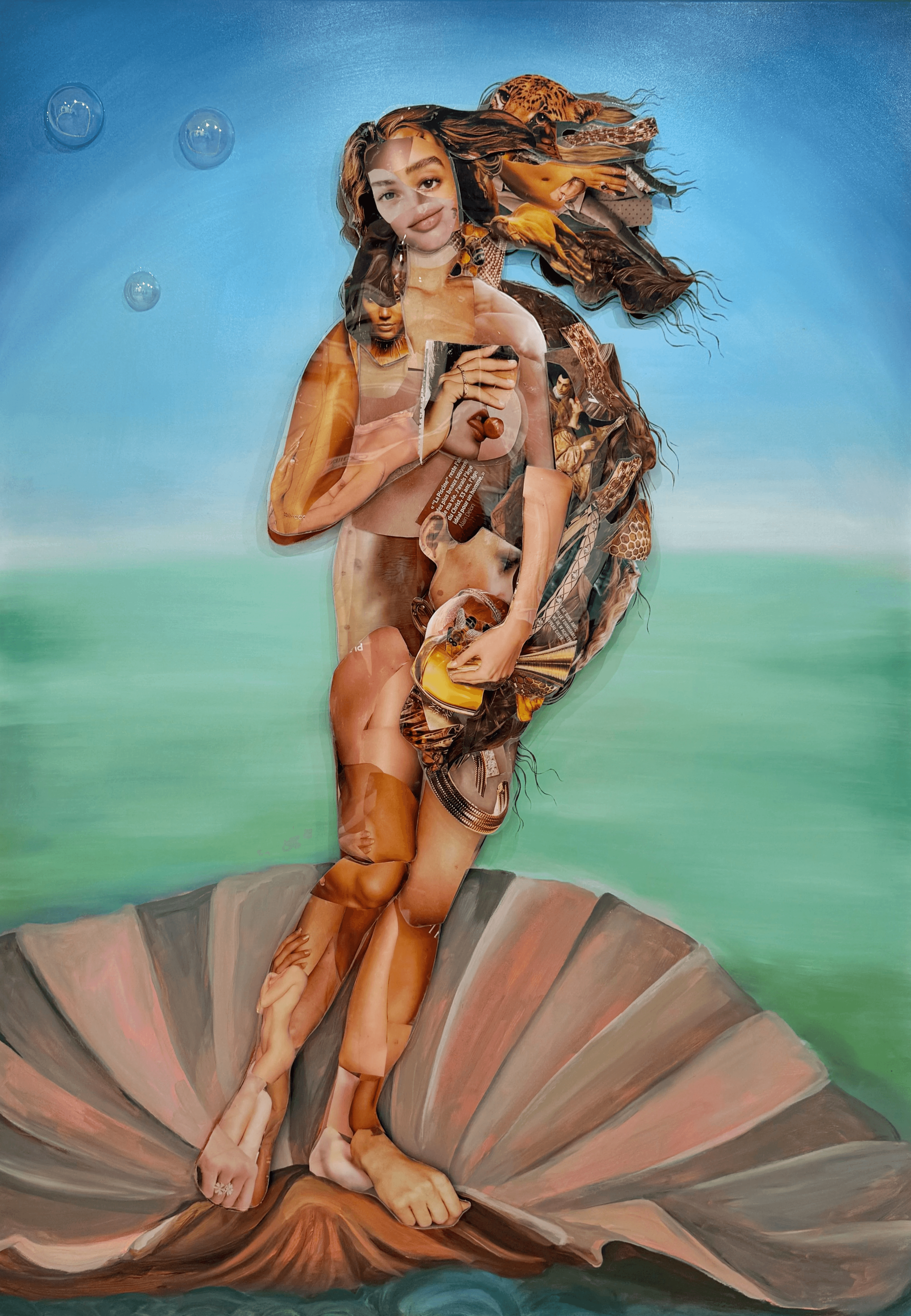
One piece that left a particularly strong impression on me was “Winter Magic.” The work uses a striking black-and-white contrast to explore the relationship between light and shadow, while the artist’s refined technical skill beautifully renders the texture of skin and fabric — especially the scarf. That balance between emotional atmosphere and technical mastery felt both restrained and deeply moving, and it reminded me how powerful subtlety can be.
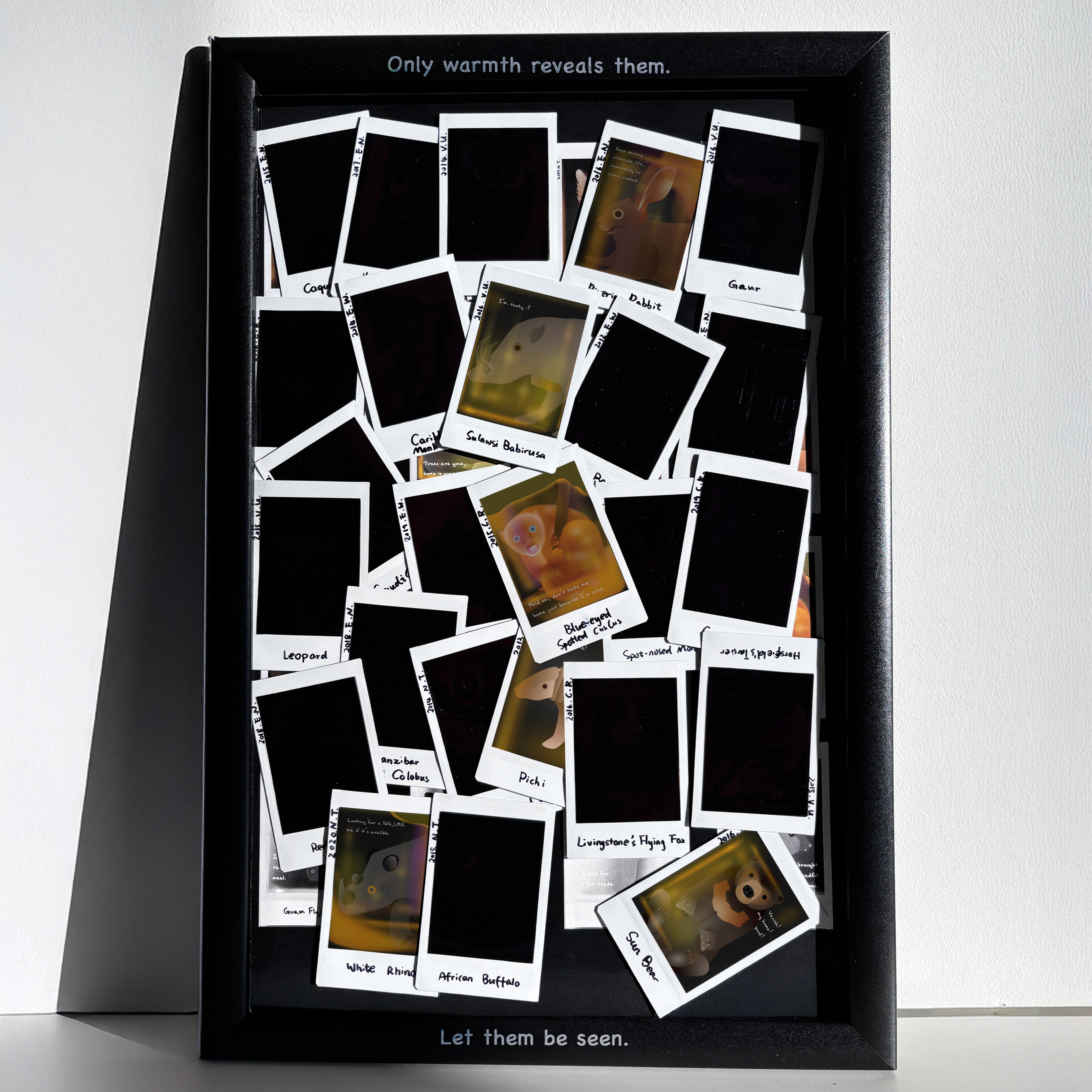
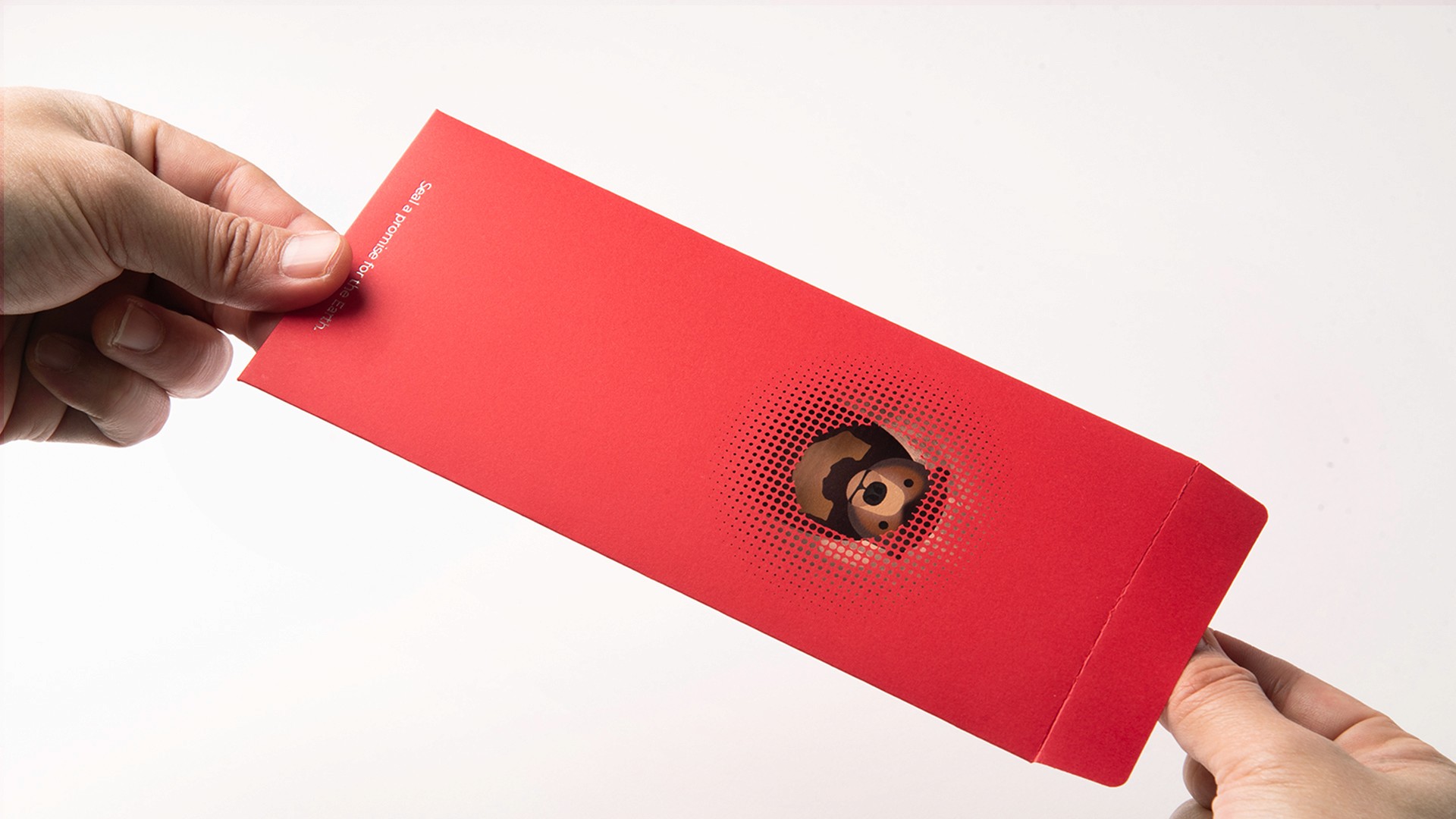
Thermal Animals. A thermochromic interactive installation where animals emerge only through human warmth—inviting viewers to “see” endangered species through care, touch, and responsibility.
From a gallery’s point of view, selection is key. What is your personal philosophy when it comes to "curating" excellence? With your background - including your IDA Gold and awards in Paris and London - you’ve reached the top tier of design. How does that experience change the way you judge others? Do you look for technical perfection first, or is it the "big idea" that grabs you?
I strongly believe that technique and creativity are mutually reinforcing. Exceptional technical skill alone can sometimes feel intimidating or distant, while ideas without sufficient craft risk feeling hollow. In my experience, as technical understanding deepens, more meaningful creative ideas naturally emerge.
For that reason, I value humility and steady growth. When designers commit to refining their skills step by step, strong concepts tend to surface organically. As a juror, I look for work where technique supports intention, and where ideas feel earned rather than forced.
Your work sits at the intersection of design and social activism. Do you believe that contemporary galleries should move more towards "problem-solving" art, or should they remain spaces for pure aesthetic contemplation?
I see galleries as inherently pluralistic spaces. Some artists are driven by problem-solving and social engagement, while others focus on beauty, emotion, or aesthetic exploration. There is no absolute hierarchy between these approaches.
What matters most is that galleries remain open and unbiased platforms—allowing different voices, intentions, and methodologies to coexist. Their role is not to prescribe what art should be, but to ensure that diverse artistic outcomes are seen, experienced, and respected.
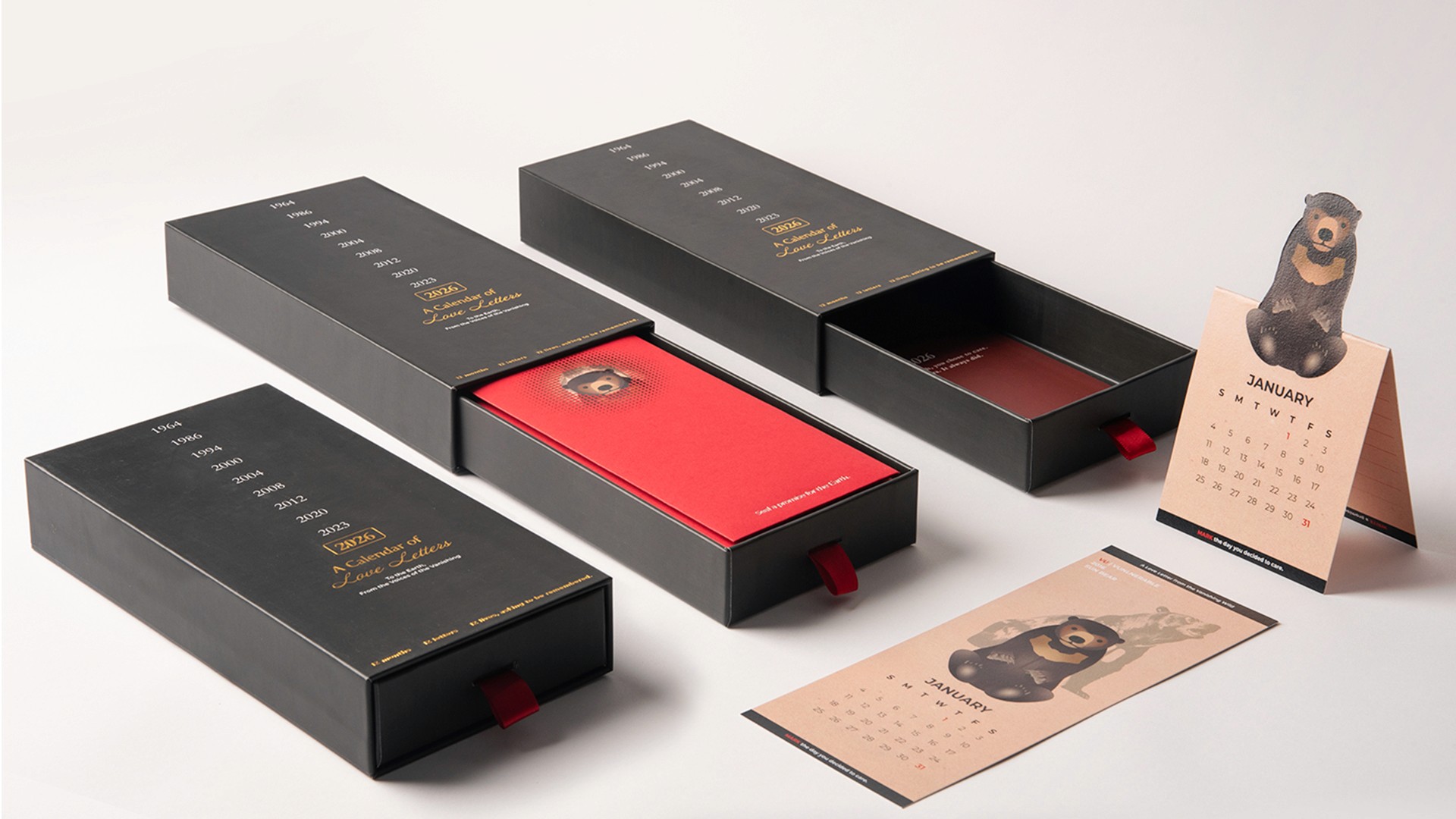
A Calendar of Love Letters. A twelve-card calendar accompanied by envelopes, encouraging daily action and reflection—each day positioned as a small but meaningful opportunity for change.
In your work, you balance engineering precision with artistic creativity. Is it difficult to switch between those two "modes" when you are developing a new project?
For me, this tension is actually where the joy of design lies—dancing while wearing constraints. Design is never only about visual expression; it must respond to real-world factors such as cost, manufacturing, printing, prototyping, and transportation.
These limitations force constant decision-making. Sometimes compromises lead to regret, but more often they push me to search for better solutions. That ongoing negotiation between reality and imagination is what keeps my practice evolving.
As a multidisciplinary designer, you wear many hats — designer, artist, social activist. Do you think the future of the art world belongs to "specialists" or "generalists" who can cross these boundaries?
I often think of designers and artists as containers. A container must first have a function—like deciding whether it is a vase or a bowl. The next question is what it holds. The richer and deeper the content inside, the more adaptable and inclusive the container becomes.
Cross-disciplinary ability grows naturally when one continuously fills that container with knowledge, experience, and reflection. In that sense, meaningful generalists are often built from deeply informed foundations rather than surface-level versatility.
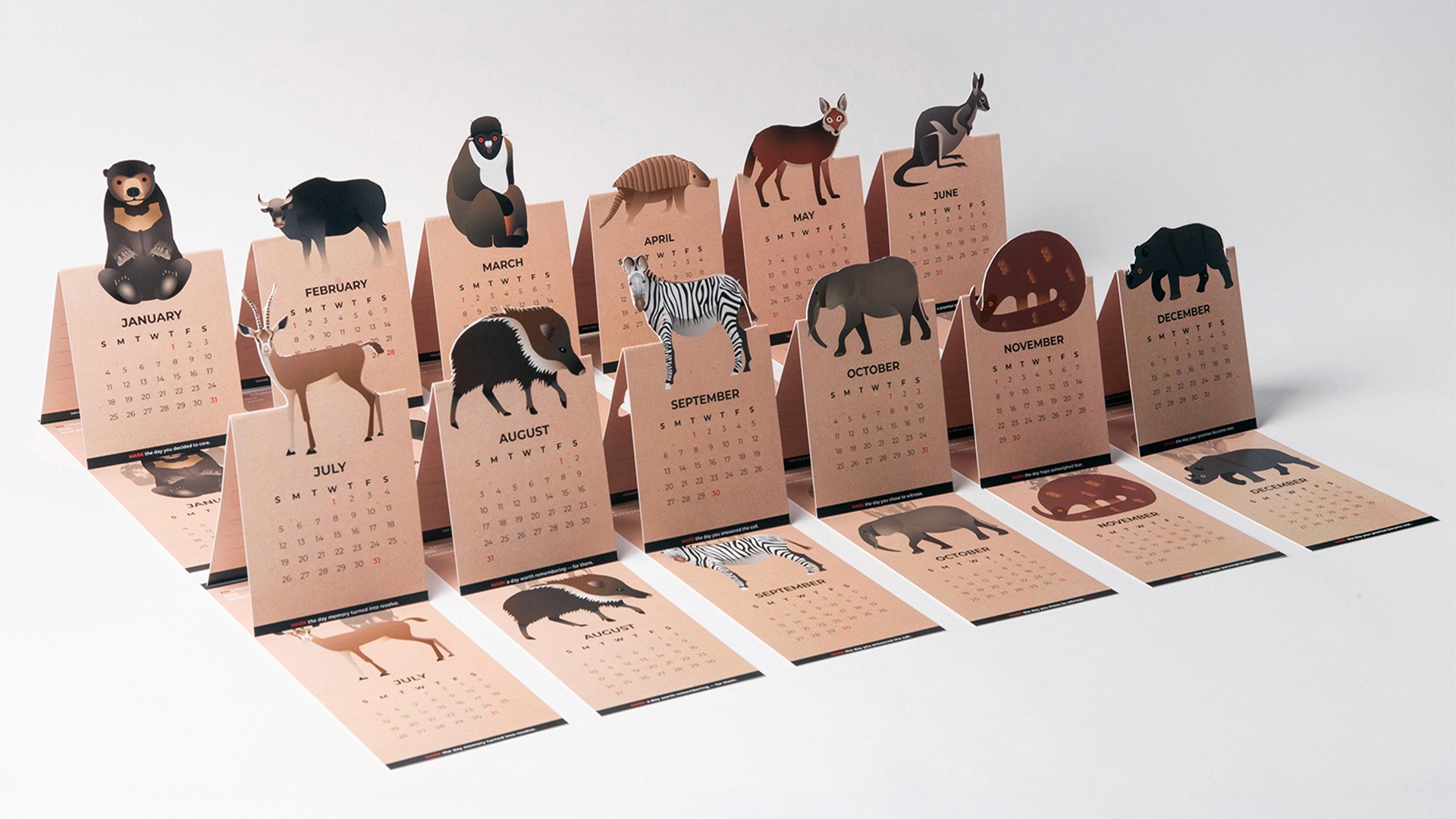
A Calendar of Love Letters. A twelve-card calendar accompanied by envelopes, encouraging daily action and reflection—each day positioned as a small but meaningful opportunity for change.
In your opinion, what is the role of the designer in the current "climate emergency"? Should we be focusing more on creating new sustainable materials, or on changing human behavior through the objects we already use?
Designers need to be proactive experimenters. This means testing new materials, but also critically reassessing existing products and systems—questioning whether they can be improved, replaced, or responsibly phased out.
Progress is rarely immediate. Many attempts may fail or show no visible impact for a long time. But meaningful change requires persistence, courage, and a willingness to continuously experiment until shifts begin to appear.
Sustainable development is often measured by global standards like the UN Sustainable Development Goals. How do you integrate these macro-level objectives (like responsible production and consumption) into the micro-level details of your design projects?
I believe it’s essential to first understand and acknowledge global standards such as the UN Sustainable Development Goals. At the same time, their real impact happens through everyday decisions—choosing more responsible materials, considering longer product lifecycles, and designing with durability and reuse in mind.
Sustainability is not a single gesture, but a series of conscious choices embedded into daily practice.
You have built an impressive collection of international awards. What is the number one piece of advice you would give to the artists in our exhibition who want their work to be noticed on a global stage?
Design is both subjective and rational. Before a product or artwork enters the world, the only thing you can rely on is intuition. That intuition, however, must be supported by continuous learning.
I believe in staying humble, constantly acquiring new skills and knowledge, and treating oneself as a container—producing work that reflects the values and fields you choose to engage with. Through that process, meaningful contributions naturally emerge.
Research Context & Expert References
This interview is a foundational part of Curatone.art’s ongoing research project: "The Impact of Contemporary Art and Design on Global Social Structures." Our research explores how artistic practices evolve into tools for social and environmental change. By documenting the insights of experts like Yefan Liu, Curatone.art aims to map the intersection of creative excellence and professional responsibility in the 21st century
Selected Bibliography & Academic Sources:
Papanek, V. (1984). Design for the Real World: Human Ecology and Social Change. Academy Chicago Publishers.
Rawsthorn, A. (2018). Design as an Attitude. JRP|Ringier.
United Nations. (2023). Sustainable Development Goals Report: Goal 12 – Responsible Consumption and Production. United Nations Publications.
Fry, T. (2008). Design Futuring: Sustainability, Ethics and New Practice. Berg Publishers.
Vol. 1, Issue 1 (2026)
Interviewed by Elizaveta Akimova, Curatone.art Project Director
Editor: Irina Naumycheva (Miami, USA) Art strategist and award-winning designer. Irina is a recipient of the Presidential Award and an expert juror for international platforms, including Apexart (USA). She is the author of the AI-Art & Design Flow methodology, specializing in the integration of AI in contemporary creative processes.
This article has undergone a double-blind peer review process.
How to cite: Example: Liu, Y. (2026). Social Activism and Spatial Design. Curatone Art & Research Journal, 1(1). Retrieved from [https://curatone.art/publications/yefan-lui].

Featured Artists
We provide media exposure on Curatone.art and across social media for selected finalists and winners