Expert Insight
Expert Insight: Xijia Cheng on Material Innovation and the Global Impact of Anime Aesthetics
Curatone Art & Research Journal, Vol. 1, Issue 1 (2026)
Received: February 19, 2026
Accepted: February 27, 2026
Published: March 2, 2026
Keywords: Sustainable fashion, zero-waste design, anime aesthetics, digital subcultures, 3D patternmaking, wearable art, material innovation, queer advocacy, circular economy, fashion archives.
Abstract: This article examines the intersection of sustainable craftsmanship and digital subcultures through the practice-based research of designer and creative director Xijia Cheng. Serving as a primary case study for contemporary ethical design, Cheng’s work demonstrates a novel methodology for transforming electronic waste and textile scraps into high-fashion sculptural garments through the integration of 3D digital patternmaking and zero-waste techniques.
The research analyzes how marginalized aesthetics, specifically those rooted in anime and queer subcultures, are being elevated into a new ethical fashion discourse. By examining the role of @animefashion.archives, the study highlights the significance of documenting youth-driven internet aesthetics as a vital form of cultural preservation. Through a professional dialogue, the article addresses the evolving identity of the contemporary designer, who must bridge the gap between artistic innovation and social responsibility. The findings suggest that clothing in the digital age increasingly functions as a tangible extension of online personas, merging material sustainability with the global circulation of niche visual languages.
As part of Curatone.art’s research project, we feature Xijia Cheng — a visionary fashion designer, creative director, and researcher at the intersection of sustainability and digital culture. Xijia’s work, which transforms unconventional waste and electronic components into high-fashion sculptural garments, serves as a primary case study for our research into ethical design methodologies and the influence of internet-driven subcultures on contemporary visual language.
Expert Biography
Xijia Cheng is an internationally acclaimed designer whose work has been featured in major global publications, including Vogue, Harper’s Bazaar, Cosmopolitan, and Glamour. Her creative portfolio includes high-profile collaborations with supermodel Coco Rocha, stars of RuPaul’s Drag Race, and major beauty brands. As the founder of @animefashion.archives, she manages the world’s first research platform dedicated to anime-inspired fashion, advocating for minority subcultures and queer creators. Xijia’s practice-based research focuses on the synthesis of 3D digital patternmaking and zero-waste craftsmanship, challenging traditional industry standards by elevating marginalized aesthetics into a new, ethical fashion discourse.
Selected for the Curatone Annual Review 2026 (Academic Print & Digital Edition).
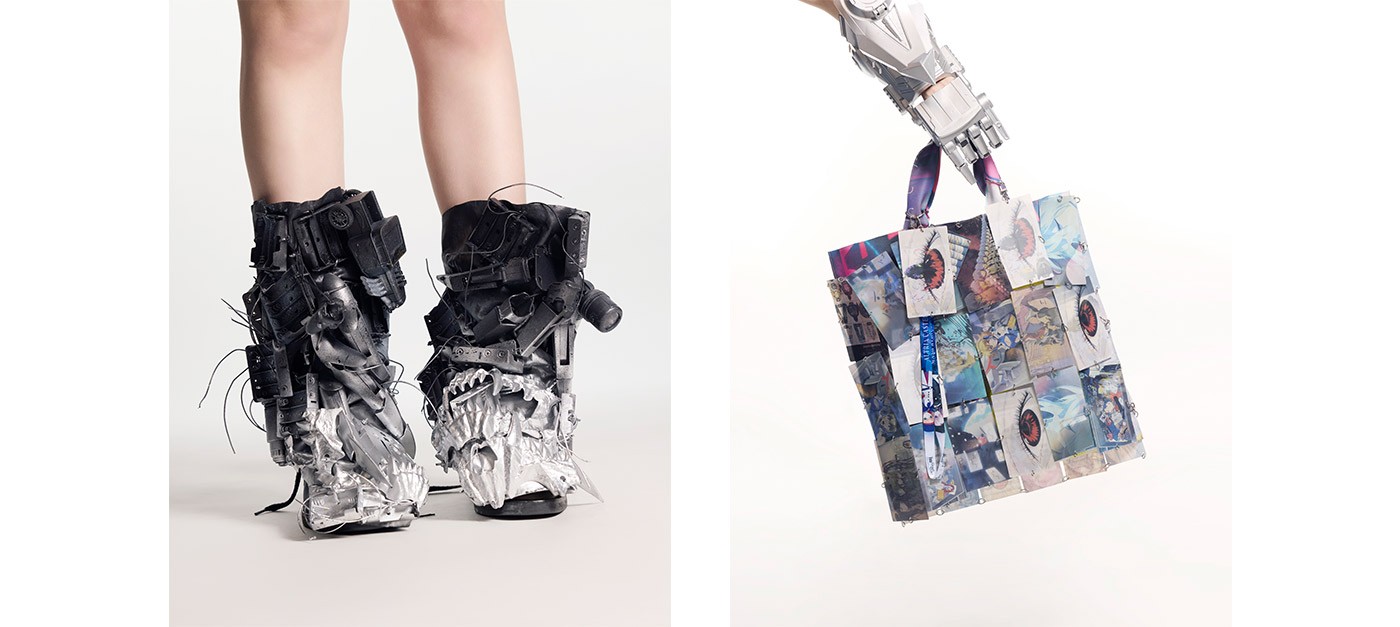
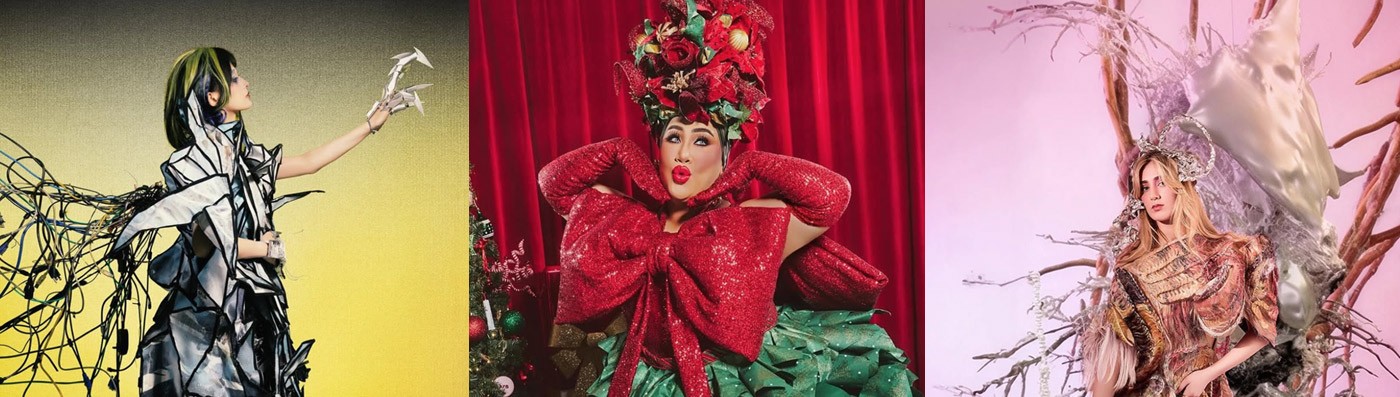
Shoe cover made with upcycled materials featured on Harper’s Bazaar Vietnam; Lenticular anime card bag & glove made with upcycled materials.
The following professional dialogue explores the intersection of sustainability and digital aesthetics through the lens of Xijia Cheng’s methodology.
Xijia, you successfully balance the roles of designer, stylist, and producer all at once. How do you manage so many responsibilities in a single project? Does having total control — from the details of a garment to the final editorial shot — help you tell a more complete story?
I approach each project as a unified creative system rather than separating design, styling, and production into different disciplines. Because my work is rooted in sustainability, subculture research, and digital innovation, maintaining control from garment construction to final editorial execution ensures conceptual consistency. Every visual element contributes to the narrative surrounding material transformation and marginalized aesthetics. This integrated process allows me to communicate a complete and intentional story.
You transform old electronics and textile scraps into high-fashion pieces. In simple terms, how does this process work? Is it difficult to combine high-tech 3D tools with traditional hand-knitting when working with such "stubborn" materials?
My process begins with sourcing unwanted materials such as broken electronics, broken figures, repurposed plastics, unwanted yarns and textile waste that would otherwise be overlooked. I integrate these materials into zero-waste knitwear structures developed alongside 3D digital patternmaking. The rigidity of electronic components makes the process technically challenging, especially when combining them with soft hand-knit textiles. However, merging digital tools with craftsmanship allows me to reshape waste into sculptural garments that challenge conventional fashion standards.
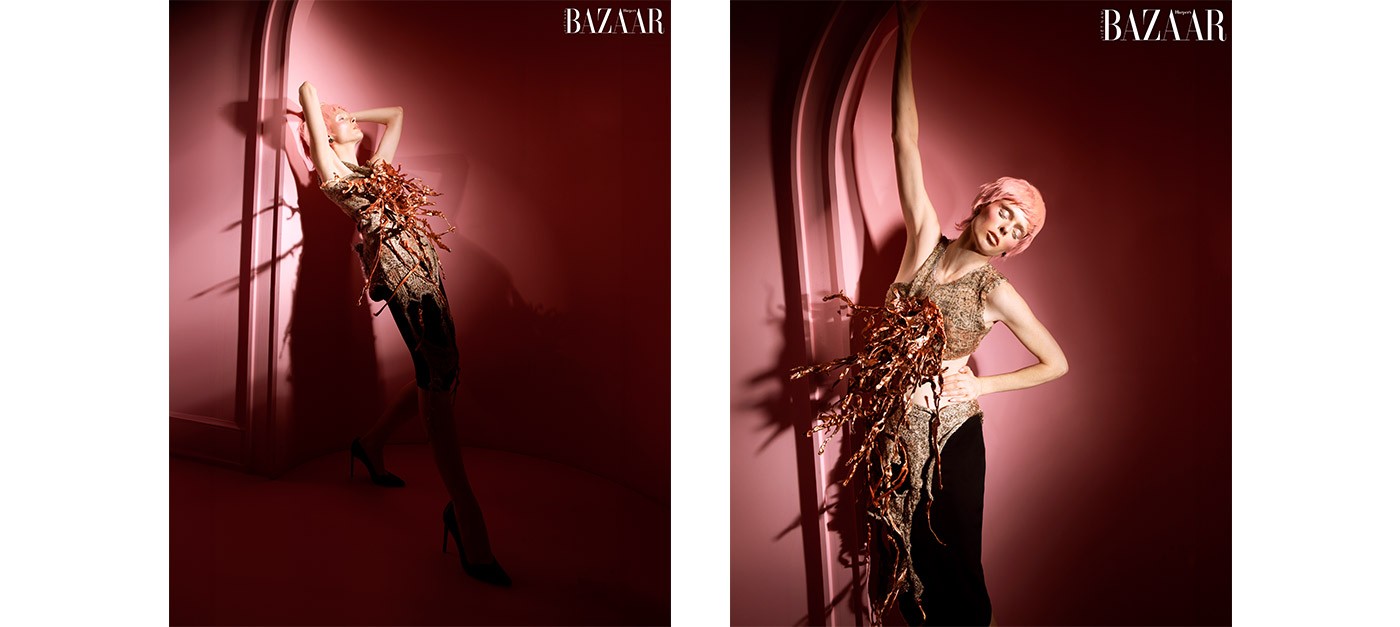
Coco Rocha wearing a zero-waste knit dress by Xijia Cheng on Harper’s Bazaar Vietnam May 2024 print Cover story.
Your work has been worn by the legendary Coco Rocha and stars from RuPaul’s Drag Race. What is it like seeing your creations on such powerful personalities? Do these collaborations help you bring more attention to causes you care about, like queer advocacy and sustainability?
Seeing my work worn by Coco Rocha and artists from RuPaul's Drag Race is deeply affirming because they embody confidence, performance, and individuality. Their presence amplifies the sculptural and transformative qualities of my designs. These collaborations expand visibility for conversations around sustainability, queer advocacy, and alternative subcultures. Fashion becomes a platform for representation when it reaches influential global audiences.
You founded the world’s first platform for anime-inspired fashion (@animefashion.archives). Why is this archive so important to you? Is it a personal love for the aesthetic, or do you see it as a vital way to document youth subcultures that the mainstream fashion world often ignores?
I founded @animefashion.archives in 2020 to formally document anime and manga-inspired fashion within contemporary design discourse. While it began from personal fascination, it evolved into a research-driven platform advocating for minority subcultures and queer creators often overlooked by mainstream fashion. The archive bridges digital youth communities with global fashion conversations. It is both a personal passion and a necessary act of cultural documentation.
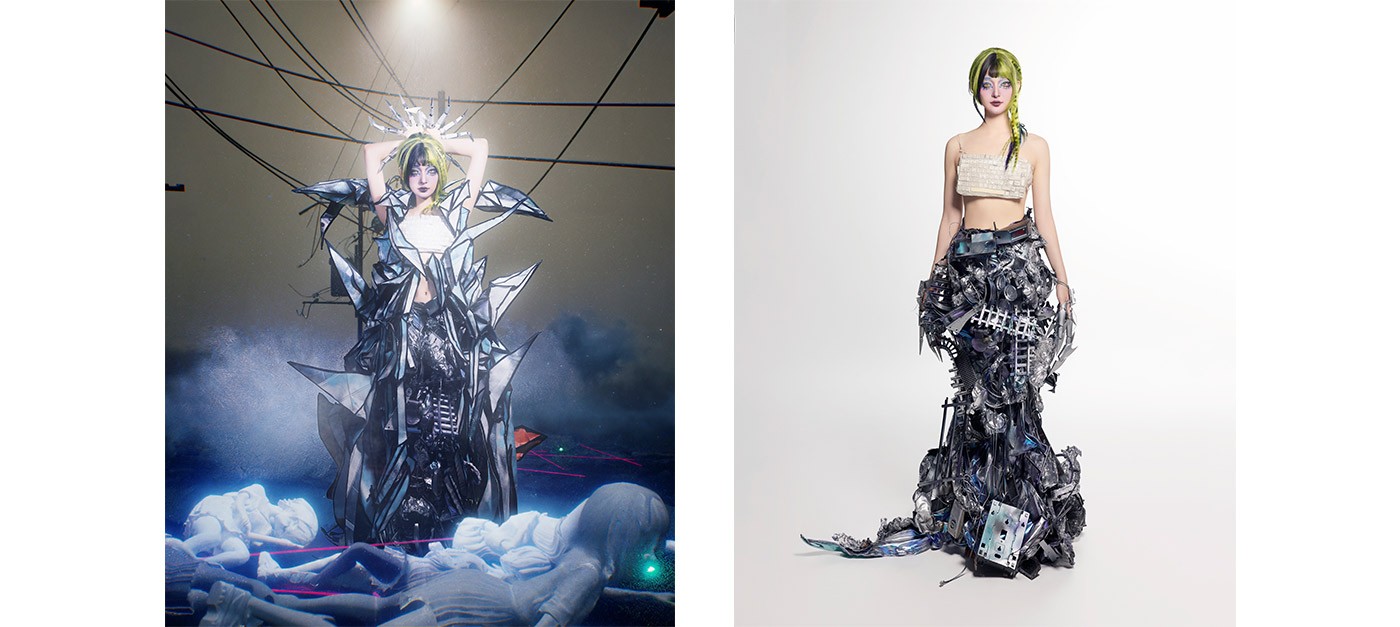
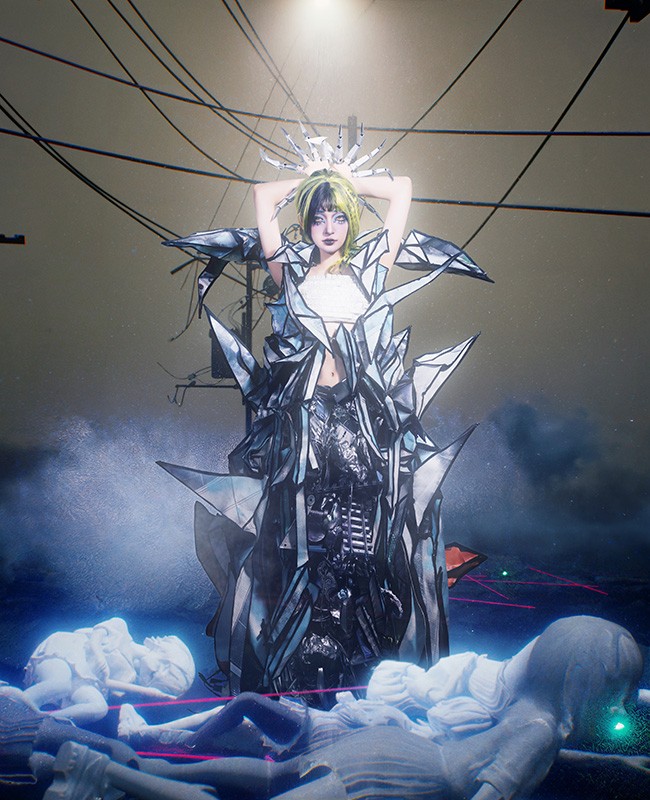
Fashion design, creative direction, styling, producer, editorial work featured on Cosmopolitan China by Xijia Cheng. This look is made with upcycled materials including electronic waste, unwanted waterproof gallery poster, broken figures & toys; Look by Xijia Cheng made with upcycled materials including electronic waste, broken figures & toys.
Today, fashion is heavily driven by social media. How is internet culture and anime changing the way we dress in real life? Do you feel that clothes are becoming a sort of "costume for our digital avatars" in the physical world?
Internet culture accelerates the global circulation of niche aesthetics, particularly those influenced by anime and digital communities. Social media enables individuals to experiment with identity beyond traditional fashion systems. As a result, clothing increasingly functions as a physical extension of digital self-expression. Garments operate as tangible avatars that translate online personas into real world presence.
In your opinion, what should a designer be today: a pure artist creating beautiful things, or a social activist using fashion to make people think about the environment and society? Which role comes first for you?
For me, artistic innovation and social responsibility are inseparable. Fashion has environmental and cultural consequences, so designers must understand their role within broader systems. My practice transforms waste materials and marginalized aesthetics into an ethical fashion language that combines fashion with purpose. Creativity initiates the work, but responsibility guides its impact.
You’ve already worked with top-tier titles like Vogue, Cosmopolitan, and Harper’s Bazaar. What is your #1 piece of advice for young designers trying to get noticed in such a massive and competitive industry?
My advice is to cultivate a distinct conceptual identity rather than chasing trends. The industry is highly competitive, but originality grounded in research and technical skill creates long-term impact. Building strong professional relationships and maintaining consistency are equally important. Consistently posting your work on social media platforms allows your voice to reach global audiences and build visibility beyond traditional gatekeepers. When your work communicates a clear vision and purpose both online and offline, recognition becomes sustainable rather than temporary.
Editorial & Review Credits
Editor-in-Chief: Elizaveta Akimova
Featured Expert: Xijia Cheng
Peer Review Board:
Quichao An (Expert Juror & Editorial Board Member. Director of WHDS & AYADA, AIGA & The One Club member, winner of Red Dot, A' Design, and Graphis Awards): "Xijia Cheng’s work presents a compelling synthesis of sustainable material innovation, digital craftsmanship, and subcultural visual language. The article offers valuable insight into how contemporary fashion can operate simultaneously as research practice, social commentary, and experimental design methodology. It contributes meaningfully to current discourse on ethical fashion and the global influence of digitally mediated aesthetics."
Anna Zhang (Expert Juror & Editorial Board Member. MFA (Parsons School of Design), multi-award-winning fashion designer (MUSE Gold, French Fashion Platinum), and member of the China Fashion Association.): "Xijia Cheng’s practice exemplifies how contemporary fashion can operate simultaneously as research, resistance, and reinvention. By transforming electronic waste and anime-driven subcultural aesthetics into sculptural, zero-waste garments, she reframes fashion as both a material experiment and a cultural archive. Her work demonstrates that sustainability is not merely a technical solution, but a narrative strategy—one that elevates marginalized visual languages into a global discourse on ethics, identity, and digital-era expression."
Research Context & Expert References
This interview is a foundational part of Curatone.art’s ongoing research project: "The Impact of Contemporary Art and Design on Global Social Structures." Our research explores how artistic practices evolve into tools for social and environmental change. By documenting the insights of experts like Xijia Cheng, Curatone.art aims to map the intersection of creative excellence and professional responsibility in the 21st century
Selected Bibliography & Academic Sources:
Black, S. (2013). The Sustainable Fashion Handbook. Thames & Hudson.
Condra, J. (2013). Encyclopedia of National Dress: Traditional Clothing Around the World. ABC-CLIO.
Fletcher, K. (2014). Sustainable Fashion and Textile Design: Design Journeys. Routledge.
Napier, S. J. (2005). Anime from Akira to Howl's Moving Castle: Experiencing Contemporary Japanese Animation. Palgrave Macmillan.
Lazaros, E. J., & Rogers, G. E. (2006). The Synthesis of Technology and Art. The Technology Teacher.
Hebdige, D. (1979). Subculture: The Meaning of Style. Routledge.
Vol. 1, Issue 1 (2026)
This article has undergone an editorial peer review process by members of the Curatone.art Editorial Board.
How to cite: Xijia Cheng (2026). Xijia Cheng on Material Innovation and the Global Impact of Anime Aesthetics. Curatone Art & Research Journal, 1(1). Retrieved from https://curatone.art/publications/xijia-cheng

Featured Artists
We provide media exposure on Curatone.art and across social media for selected finalists and winners