Expert Insight
Expert Insight: Svetlana Malkova on Visual Arts, Social Responsibility, and the Creative Journey
Curatone Art & Research Journal, Vol. 1, Issue 1 (2026)
Received: March 10, 2026
Accepted: March 12, 2026
Published: March 18, 2026
Keywords: Visual Arts, Art Therapy, Social Impact, International Exhibitions, Art Education, IAA, Painting, Mentorship.
Abstract: This interview documents the professional journey of Svetlana Malkova, focusing on the intersection of fine art, social activism, and international mentorship. It highlights her significant contribution to social welfare through art therapy for vulnerable populations and examines her criteria for artistic excellence in a globalized context.
As part of Curatone.art’s research project, we feature Svetlana Malkova — a multidisciplinary artist and member of the International Association of Art (IAA/AIAP). This interview explores how professional excellence and social engagement define the role of an artist in the 21st century.
Expert Biography
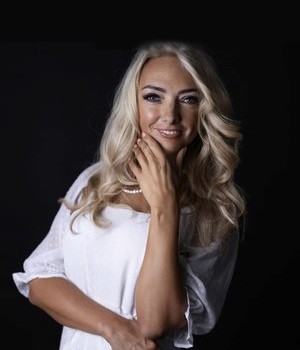
Svetlana Malkova is a multidisciplinary artist and member of the International Association of Art (IAA/AIAP) with over 15 years of experience. Her award-winning work has been exhibited in the USA, Italy, China, and Russia. A leader in social activism, Svetlana has partnered with the "Starost v radost" (Joy of Old Age) Foundation since 2021, providing art therapy to over 100 students across 22 nursing homes. As an International Judge, she helps set global standards for the creative industry, combining technical mastery with a commitment to social impact.
Selected for the Curatone Annual Review 2026 (Academic Print & Digital Edition).
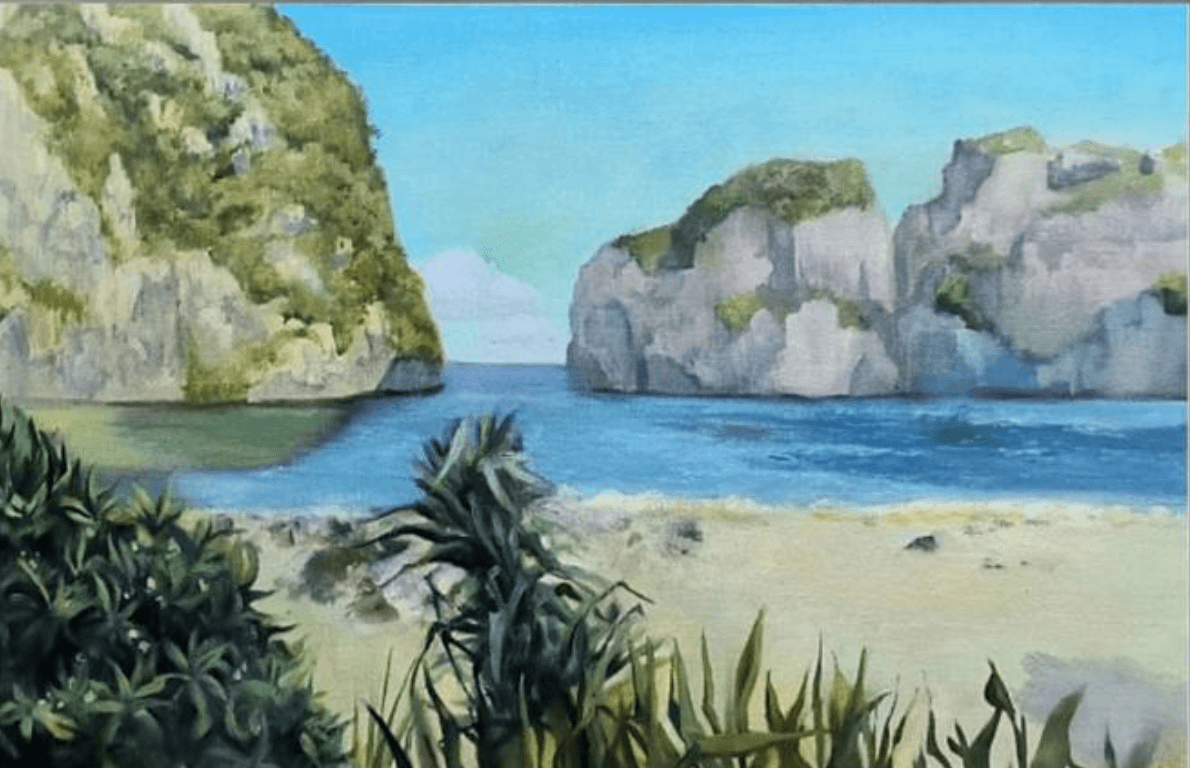
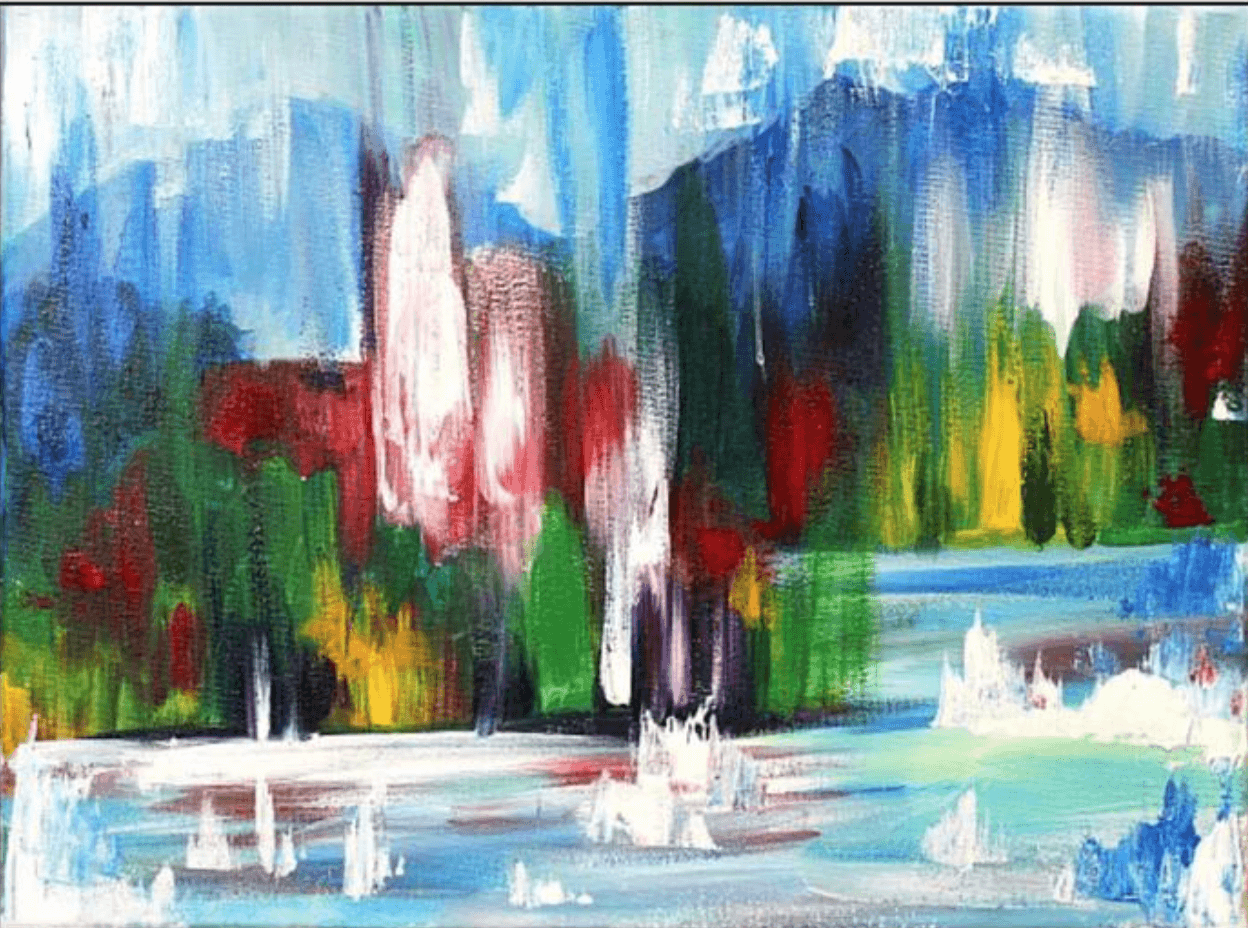
Rocks by the Blue Bay. Oil on Canvas. 20 W x 16 H x 1.4 D in
Svetlana, your paintings are known for their complex metaphors and deep emotional resonance. When you are working on a new canvas, do you start with a specific message you want to convey, or does the idea evolve naturally through the process of painting?
For me, the creative process usually does not start with a clearly formulated message but with an emotional impulse. Often, the starting point is a visual image, a color atmosphere, or a symbolic form that reflects a certain inner state. As I work on the painting, its meaning gradually unfolds through the interaction of intuition and technique. I believe that painting is a kind of dialogue between the artist and the canvas. Sometimes the initial idea changes completely in the process, and the final work turns out to be deeper and more complex than the original concept. This openness to transformation is an important part of my creative method.
You belong to several prestigious groups like International Association of Art. In simple terms, how does being a member of such professional unions help an artist grow and reach a global audience?
Professional organizations, such as the International Association of Art, create an important international network for artists. Membership allows one to establish connections with colleagues from different countries, participate in exhibitions, and engage in professional discussions about the role of art in contemporary society. For me, it is also a platform where artistic practice is considered not only as personal creativity but also as part of a global cultural dialogue. Such associations help maintain professional standards and stimulate international collaboration.
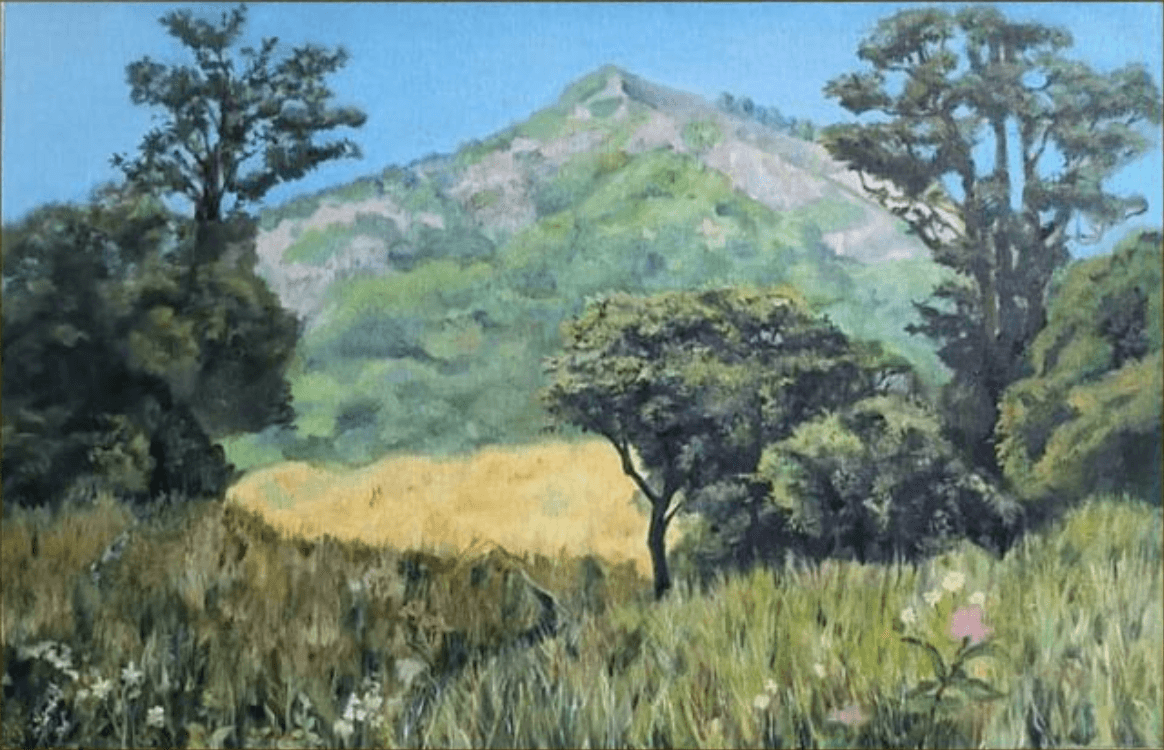
The Silence of the Hills. Oil on Canvas. 20 W x 16 H x 0.8 D in
Since 2021, you have been teaching online drawing classes for the elderly and people with mental disorders across dozens of nursing homes. In 2025 alone, over 100 people from 22 institutions participated through your work with the "Starost v radost" Fund. How has this social project changed your understanding of the power of art to heal and connect people?
Working with elderly people in nursing homes has significantly changed my understanding of the role of art in society. Many participants initially believe that they “cannot draw,” but through simple exercises and support, they gradually discover their ability for artistic expression. Art becomes a form of communication that does not depend on age, language, or physical condition. I have observed how creative activity improves people’s emotional state, reduces feelings of loneliness, and helps them reconnect with their memories and personal history. This experience convinced me that art is not only a cultural practice but also a powerful tool for emotional support and human connection.
When you act as a judge for international competitions, how does your own experience as a painter influence your decisions? What is the very first thing you notice in a piece of art — is it the technical skill, or the "spark" of the original idea?
Technical skill is certainly important, but the first thing I pay attention to is the authenticity of the artistic idea. A work may be technically flawless, but if it lacks a sincere authorial voice, it rarely leaves a deep impression. When evaluating pieces, I try to see the balance between concept, composition, and execution skill. My own experience as an artist helps me recognize the effort, experimentation, and exploration behind each work. It is also important to me how successfully the artist conveys their idea or emotional state to the viewer.
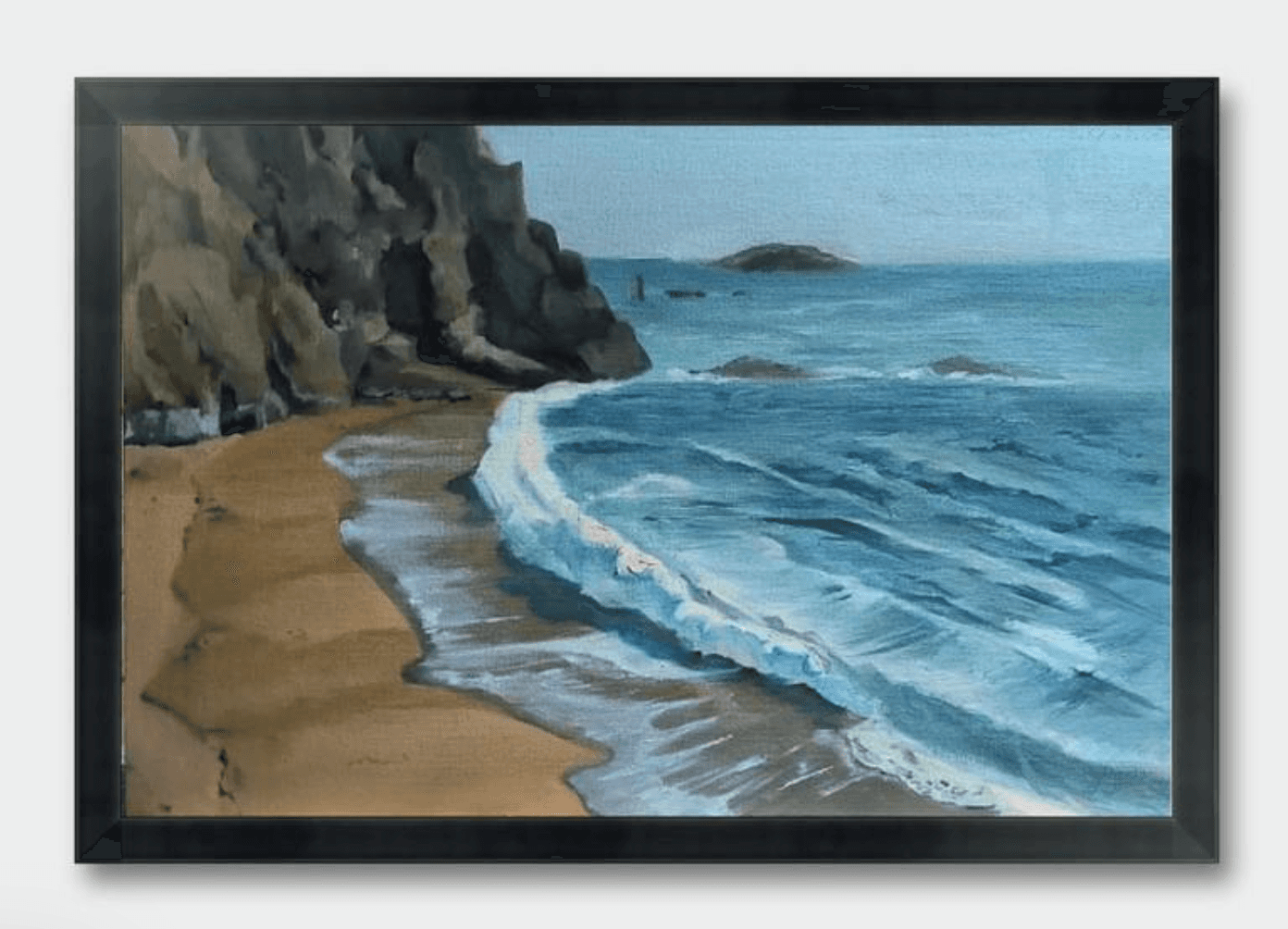
Waves of Dusk. Oil on Canvas. 20 W x 16 H x 0.8 D in
You have exhibited your work in many countries, including Italy, China, and the USA. How does seeing your work in different cultural settings change your own perspective on your art?
International exhibitions are always a very interesting experience because each cultural environment offers new interpretations of the works. Viewers from different countries often notice details or meanings that I did not consciously emphasize while creating the work. This reminds me that art exists within a global dialogue, not just within a single cultural tradition.
Observing the audience’s reactions in different countries, I begin to reflect more broadly on symbolism, the language of color, and universal human themes.
Besides your social projects, you have extensive experience teaching others. How does the process of explaining art techniques to your students bring new energy or fresh ideas into your own private studio practice?
Teaching is one of the most enriching parts of my professional activity. When you explain artistic techniques to others, you inevitably start to analyze your own creative process more consciously. Such reflection often leads to new discoveries. Moreover, students bring a fresh perspective and ask unexpected questions that can challenge habitual ways of thinking. Their curiosity and enthusiasm frequently inspire me to experiment in my own studio.
For those just starting their creative journey today, what are the most important habits or mindsets they should develop to succeed in the modern art world?
Young artists today need both creative discipline and intellectual curiosity. It is important to practice regularly while remaining open to experimentation and learning. Artists also need to engage with the broader cultural and social context in which their art exists. Participating in exhibitions, professional projects, and continuously studying art history and current trends plays an important role. However, most importantly, one must remain true to their own artistic vision, because it is an authentic authorial voice that ultimately resonates with viewers.
Editorial & Review Credits
Editor-in-Chief: Elizaveta Akimova
Featured Expert: Svetlana Malkova
Peer Review Board:
Irina Naumycheva (Award-winning art strategist and creator of the "AI-Art & Design Flow 2025" methodology, recognized with the Presidential Award of the Russian Federation and distinguished as an international juror for global platforms such as Apexart (USA): "This interview provides a profound exploration of the artist's dual role as a creator and a social catalyst. Svetlana Malkova’s work with art therapy in nursing homes serves as a compelling case study for the 'social turn' in contemporary art, demonstrating how aesthetic practice can be effectively transformed into a powerful tool for emotional rehabilitation and cross-generational connection."
Xijia Cheng (Award-winning Canadian designer and creative director featured in Harper’s Bazaar, Cosmopolitan, and Glamour): "Svetlana Malkova’s work masterfully bridges the gap between sophisticated visual metaphors and tangible social impact. Her professional journey serves as a powerful testament to how artistic excellence can be leveraged as a transformative tool for global social welfare and human connection.The interview provides an excellent balance of personal artistic philosophy and practical social application. The specific data regarding the "Starost v radost" Foundation adds impressive weight to the narrative of art's healing power."
Research Context & Expert References
This interview is a foundational part of Curatone.art’s ongoing research project: "The Impact of Contemporary Art and Design on Global Social Structures." Our research explores how artistic practices evolve into tools for social and environmental change. By documenting the insights of experts like Svetlana Malkova, Curatone.art aims to map the intersection of creative excellence and professional responsibility in the 21st century
Selected Bibliography & Academic Sources:
Malkova, S. (2025). "Methodology of creating paintings using heat-sensitive paints for children: an innovative approach in learning and creativity"
Arnheim, R. (1974). Art and Visual Perception: A Psychology of the Creative Eye. University of California Press.
UNESCO. (2023). The Status of the Artist: Global Report on the Socio-Economic Conditions of Artistic Professionals.
Malchiodi, C. A. (2020). Trauma and Expressive Arts Therapy: Brain, Body, and Imagination in the Healing Process. Guilford Press.
Gardner, H. (1990). Art Education and Human Development. Getty Publications.
Vol. 1, Issue 1 (2026)
This article has undergone an editorial peer review process by members of the Curatone.art Editorial Board.
How to cite: Svetlana Malkova (2026). Svetlana Malkova on Visual Arts, Social Responsibility, and the Creative Journey. Curatone Art & Research Journal, 1(1). Retrieved from https://curatone.art/publications/svetlana-malkova-on-visual-arts

Featured Artists
We provide media exposure on Curatone.art and across social media for selected finalists and winners