Expert Insight
Summer Roshni Bhullar on the Intersection of Art and Coaching
Curatone Art & Research Journal, Vol. 1, Issue 1 (2026)
Received: April 27, 2026
Accepted: May 4, 2026
Published: May 5, 2026
Keywords: Visual Arts, National Association of Women Artists (NAWA), Art Coaching, Professional Advocacy, The Phillips Collection, Exhibition Practice, Creative Leadership.
Abstract: This interview documents the professional journey of Summer Roshni Bhullar, focusing on the synergy between fine art, professional community leadership, and multidisciplinary coaching. The text explores the impact of membership in art associations on a contemporary career, analyzes the experience of high-level institutional exhibitions, and investigates the methodology of merging creative practice with coaching strategies for personal transformation.
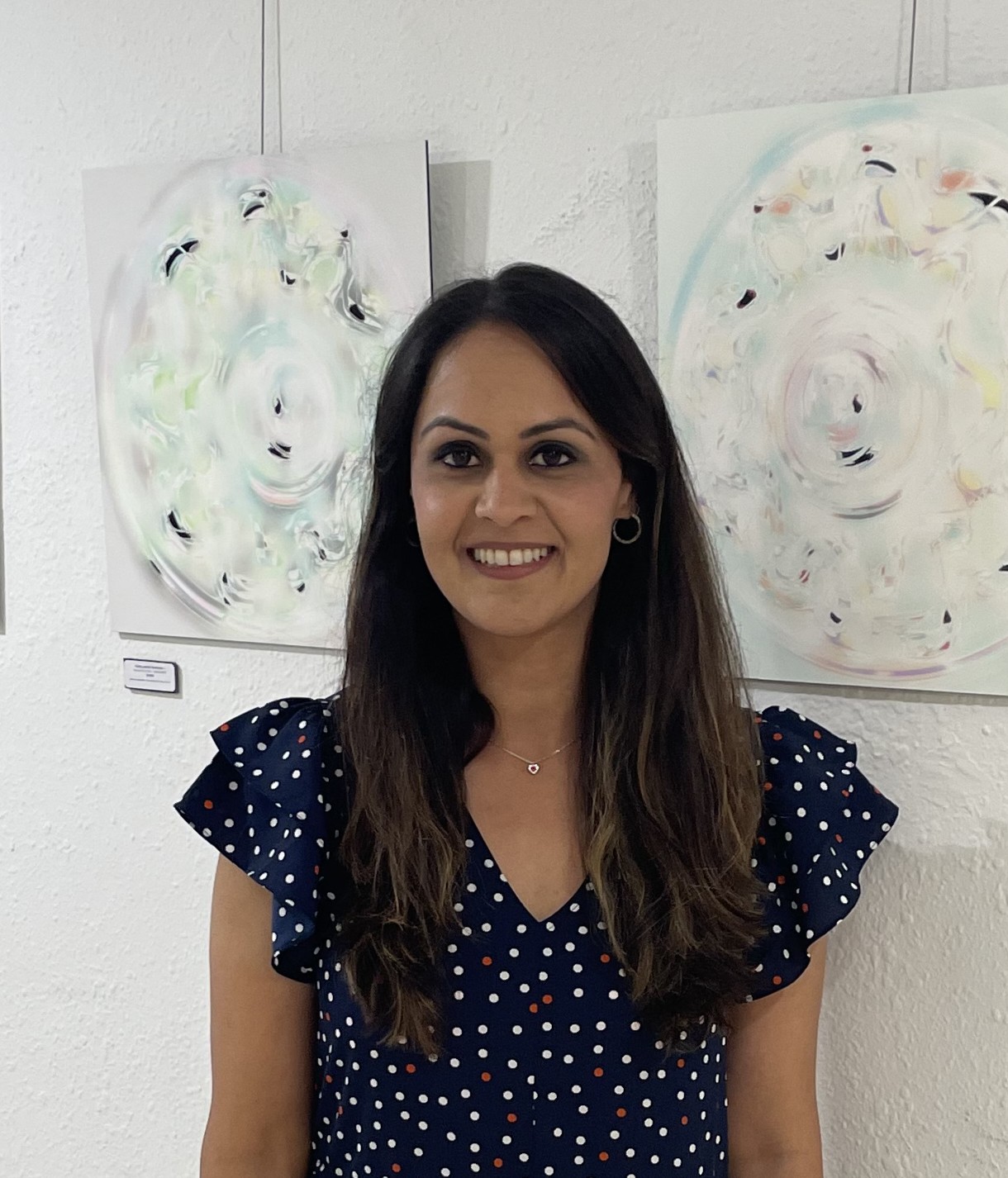
As part of Curatone.art’s research project, we feature Summer Roshni Bhullar - a distinguished visual artist, professional mentor, and a juried member of the National Association of Women Artists (NAWA). This interview explores how the synergy between artistic mastery, institutional advocacy, and transformational coaching defines the multifaceted role of a creative leader in the 21st century.
Expert Biography
Summer Roshni Bhullar is a distinguished international artist, educator, and mentor with an active exhibition practice spanning over 15 years. As a juried member of the National Association of Women Artists (NAWA) - the oldest professional women's fine art organization in the United States - she contributes significantly to the institutional support of creators. Her work has been showcased at premier venues, including The Phillips Collection, and her theoretical research is regularly featured in respected cultural publications such as Pen Women Magazine.
Selected for the Curatone Annual Review 2026 (Academic Print & Digital Edition).
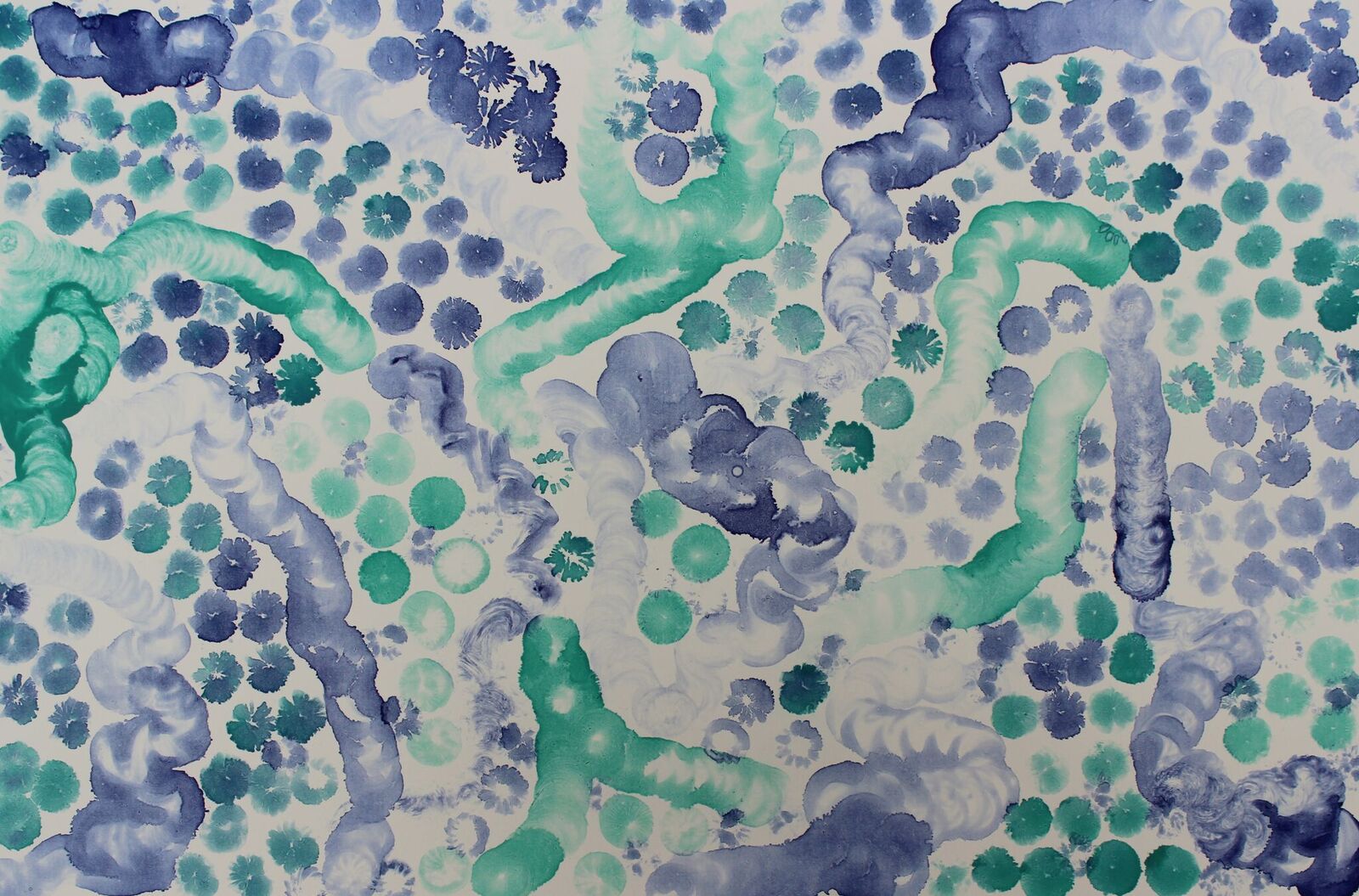
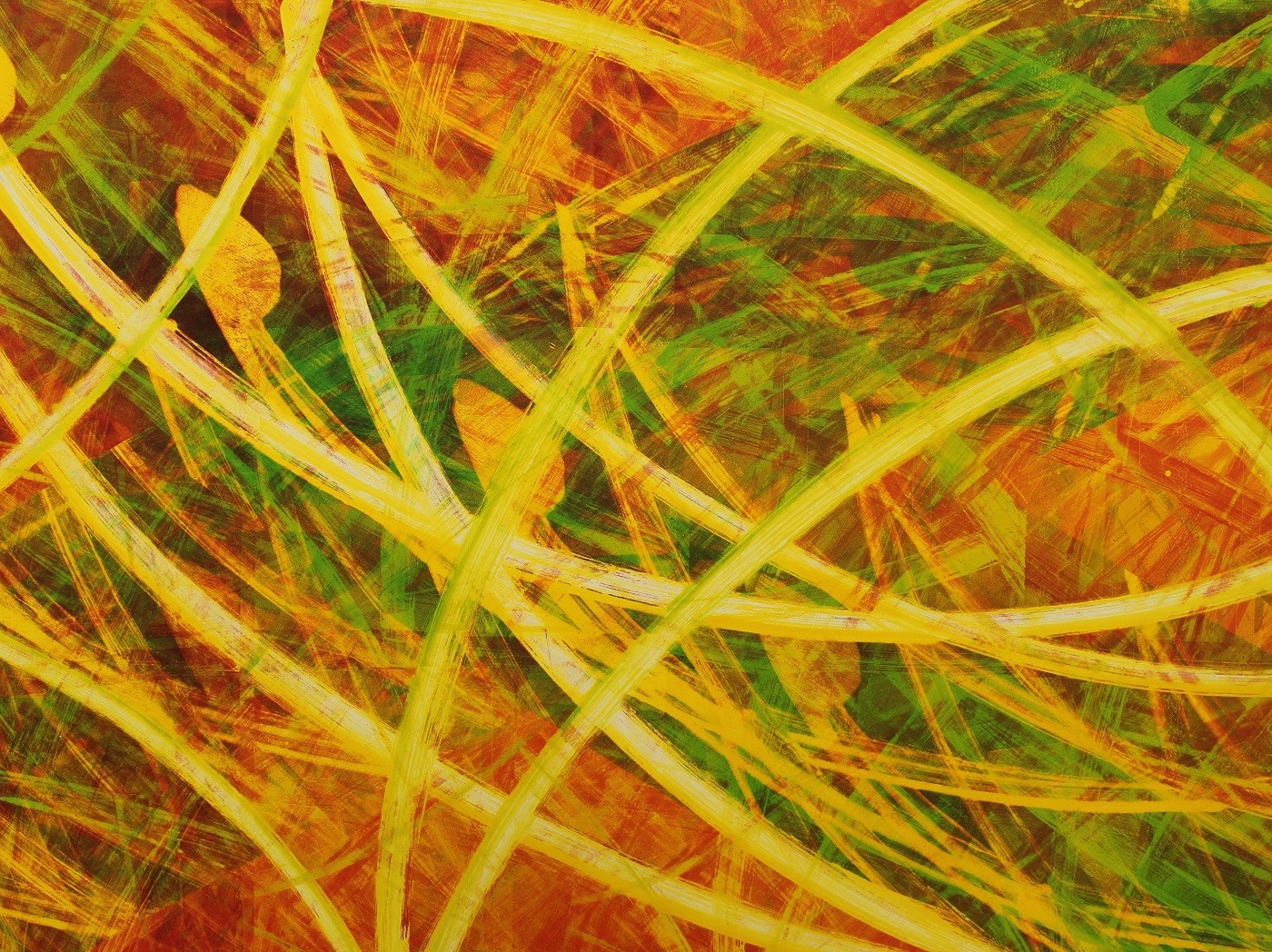
Bliss of Homecoming. Monotype (Printmaking). 16x24, 2015
Summer, your active exhibition career began in 2011 and has since included dozens of shows across the United States and abroad. Looking back at this impressive track record, how do you believe your visual language has transformed? In your opinion, how critical is an intensive exhibition schedule for the professional growth of a contemporary artist?
As you put it, this has been a journey of immense transformation. Art is a language for me; it is the language through which I best communicate. It allows me to express and show things more than any other verbal language can, even more than my mother tongue, Punjabi.
Just as our spoken expression changes with life, with reading, and with experience, my visual language has also changed tremendously over time as I have grown through life. It began when I was in art school, not yet aware of which medium or method would become my primary language. Over time, I discovered that, and today the process has become very intuitive and fluid. That is how I would describe it. My visual language has evolved from thinking and planning to a state where all I need is a brush. I enter a certain zone, connect to the soul, and allow the art to speak.
An intensive exhibition schedule is important for experience and for building a résumé. However, in terms of inner growth and the core driving force of creative energy, which each artist comes to understand over time, it is not at the top of my list. It can provide encouragement and validation in the early stages, until an artist begins to find that sense of grounding within themselves.
You are a juried member of the National Association of Women Artists (NAWA). In academic circles, the role of art unions in the 21st century is often debated. Based on your experience, how does membership in an association with such deep historical roots help an artist translate their values to a global audience and influence the modern art market?
The National Association of Women Artists is a very prestigious organization, and I feel honored to be a part of it, especially because it is a women’s organization. I often reflect on the fact that women today have it somewhat easier than women from earlier generations, because they have done much of the hard work that we now benefit from.
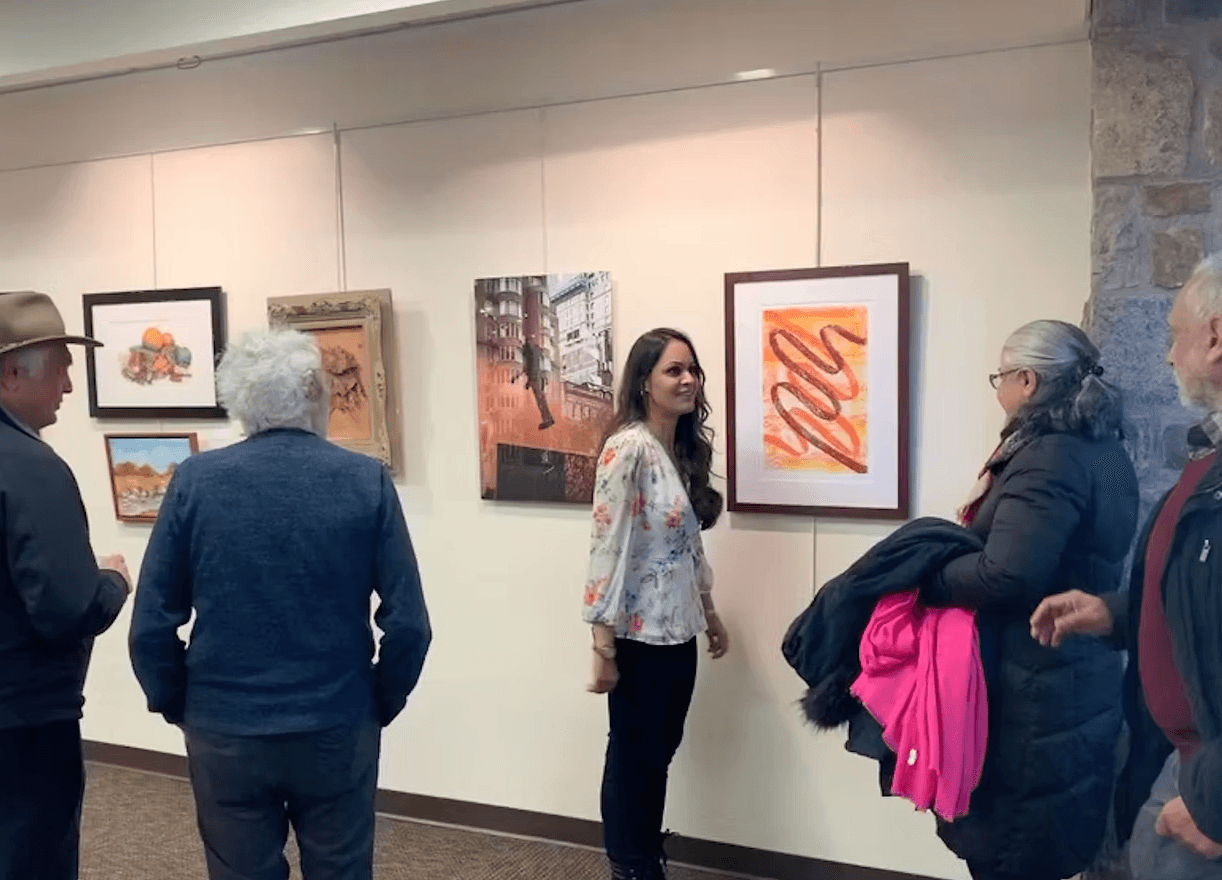
In my personal belief, when a cause comes together, whether in art or otherwise, there is greater power and energy in the collective towards change and growth. That is how unions and a sense of connectedness help, as opposed to working in isolation.
Today, I am part of a rich artistic history shaped by so many women before me. Each of us is different and brings unique values, cultures, perspectives, and ways of expression. Yet we are united by a common purpose, which is art, the growth of art, and the presence of women and their work before a global audience.
In my opinion, that collective presence and shared voice naturally influence the modern art market.
The Supreme Creative Power. 22.5x30inches. Monotype (Printmaking), 2015
One of the unique facets of your work is the integration of art practice with coaching. Could you reveal the methodology behind this synthesis? How do visual art tools assist in achieving coaching goals, and at what point does the process of creating a painting shift from a purely aesthetic act into a tool for personal transformation and mentoring?
As I mentioned earlier, art is my primary language. It is a way through which I understand myself more deeply. It allows me to tap into the nonverbal part of myself, where many of my vulnerabilities reside, and to bring that into the external world.
Here it is important for me to connect this to art healing and art therapy. I am not professionally trained in this area, but art has played a major role in my own healing and in helping me find myself. That is how I integrate it into coaching.
Before a child learns how to speak, they still express themselves through crying, through actions, through drawing and mark-making, and so on. The integration of art and coaching works at this level. This is where healing and growth begin, where individuals can access the unspoken parts of themselves and begin to see them more clearly. This is where coaching and art come together hand in hand.
The act of painting itself, for me, becomes a tool for personal transformation and mentoring. This deepens once I share what the work has revealed to me, allowing it to also resonate with the viewer. While the act may be deeply personal and aesthetic for me, for someone else it may not be the same, as they may see things they are not yet ready to transform.
For me, the transformational aspect of art begins even before the painting starts.
In addition to your studio work, you are a frequent contributor to Pen Women
Magazine and The Phillips Collection blog. How important is it for a modern artist to possess skills in critical writing and participate in theoretical discussions? Does academic reflection on your own work help you better understand the structure of your visual narrative?
My process and my journey in art began in a place that was very nonverbal. The reason for that was that I had not yet found my voice. I had not discovered who I was within and what I wanted to say. Through my journey in art, I came closer to that voice and to that inner self.
Over time, I began to realize how important it was for me to give words to my art and to artistic ideas as a whole. We live in a world where not everyone chooses the path of art, and words become important for inclusivity and for self-clarity. It is essential to connect the verbal and nonverbal parts of ourselves for deeper understanding.
Academic reflection on my work helps me connect the intangible and transcendental qualities of my visual narrative and make them more tangible and logically understandable. It becomes important for me to translate my language of art into a language of words that is more widely understood, allowing a broader audience to engage with the transformational qualities of my work.
In that sense, writing also helps me articulate not only my own artistic language, but also to better understand the language of art itself.
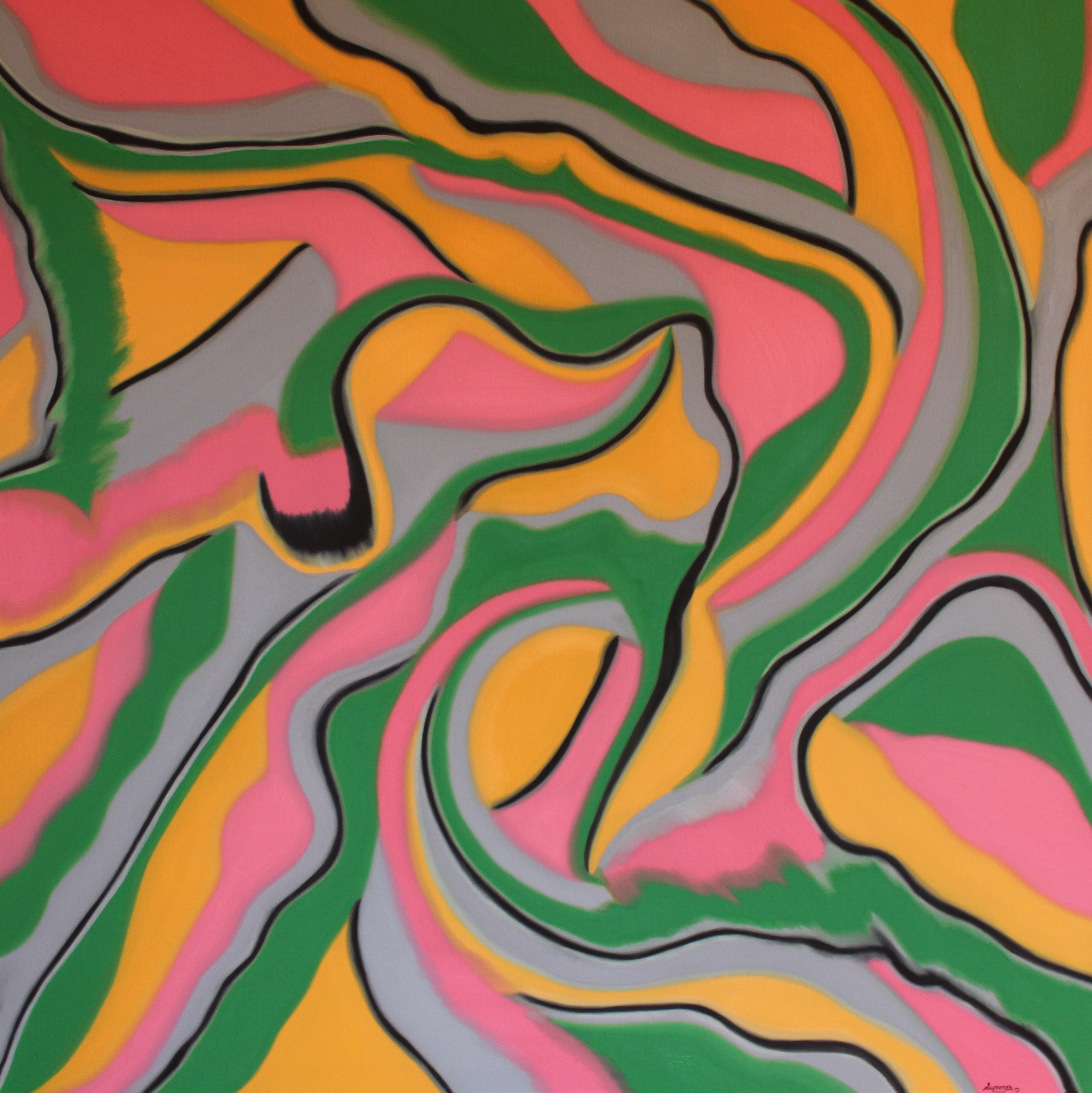
A Self in Worship. Oil on Canvas. 44x44inches, 2013
As a member of the Jury Board for the recent "Inner Landscapes" competition, you evaluated dozens of international submissions. From your professional perspective, what criteria were most critical in identifying works that successfully translated a purely personal "internal" experience into a universal visual language? Did you observe any emerging global trends in how contemporary artists represent the subconscious today?
It was not a coincidence for me that I began my journey with Curatone.art with the theme of “Inner Landscapes,” as it is an integral part of my own art journey as well. That gave me an even deeper lens through which to experience the artworks.
We are all the same at our core. We love, we feel pain, we experience happiness and sadness, and yet we express these emotions differently through our own ways and languages. My criteria focused on the connection between the universal feeling and the personal intention. I was looking to see whether the language being expressed was able to communicate that message clearly to me.
Contemporary artists today are becoming increasingly experimental, bold, and well-versed in new materials. I observed a wide range of evolving methodologies and media, which reflects how artists themselves are continuing to evolve.
As a leader in the art community and a practicing coach, what key habits or cognitive mindsets do you recommend aspiring artists develop? In an oversaturated media environment, how can an artist maintain the authenticity of their voice while simultaneously managing a career, exhibitions, and public advocacy?
It is very essential, in my opinion, and it is something I practiced myself. Although my approach was not widely accepted or understood, I strongly believe in limiting exposure to similar artistic styles during the phase when an artist is developing their voice. During that early and porous phase, the mind of an artist is like that of a child, learning and forming its own direction. Sometimes, too much external influence can affect the artist in a negative way. This is a time to find one’s own voice and expression, and comparison can be detrimental, especially when you are still discovering what feels right or true for you. I followed this approach for a couple of years while I was developing and finding my artistic identity. Once I had a stronger sense of who I was as an artist, I allowed myself to open up, observe, and take in the work of others for further understanding and growth. Today, we live in an oversaturated media environment, and maintaining conviction and self-trust becomes both more important and more challenging. One way to navigate this is by deeply connecting with your own artistic voice and refining your skills to a level where external influences and the constant influx of visual information do not create doubt at your core.
Editorial & Review Credits
Interviewed by Elizaveta Akimova, Curatone.art Project Director
Featured Expert: Summer Roshni Bhullar
Editor: Irina Naumycheva (Miami, USA) Art strategist and award-winning designer. Irina is a recipient of the Presidential Award and an expert juror for international platforms, including Apexart (USA). She is the author of the AI-Art & Design Flow methodology, specializing in the integration of AI in contemporary creative processes.
This article has undergone an editorial peer review process by members of the Curatone.art Editorial Board.
How to cite: Roshni Bhullar, S. (2026). Summer Roshni Bhullar on Visual Narrative, Professional Advocacy, and the Intersection of Art and Coaching. Curatone Art & Research Journal, 1(1). Retrieved from https://curatone.art/publications/summer-roshni-bhullar
Research Context & Expert References
This interview is a foundational part of Curatone.art’s ongoing research project: "The Impact of Contemporary Art and Design on Global Social Structures." Our research explores how artistic practices evolve into tools for social and environmental change. By documenting the insights of experts like Summer Roshni Bhullar, Curatone.art aims to map the intersection of creative excellence and professional responsibility in the 21st century
Selected Bibliography & Academic Sources:
Whitworth, L., Kimsey-House, H., & Sandahl, P. (2018). Co-Active Coaching: The Proven Framework for Transformative Conversations at Work and in Life. Nicholas Brealey Publishing.
International Coach Federation. (2021). The Gold Standard in Coaching: Core Competencies and Ethical Guidelines for Professional Mentors. ICF Global Press.
Eisner, E. W. (2002). The Arts and the Creation of Mind. Yale University Press.
McNiff, S. (2009). Integrating the Arts in Therapy: History, Theory, and Practice. Charles C Thomas Publisher.
National Association of Women Artists. (n.d.). "The History of NAWA: A Legacy of Professional Women in the Arts."https://thenawa.org/nawa-history/
Gardner, H. (1990). Art Education and Human Development. Getty Publications.
Vol. 1, Issue 1 (2026)
DOI: https://doi.org/10.5281/zenodo.20358449

Featured Artists
We provide media exposure on Curatone.art and across social media for selected finalists and winners