Fashion & Culture
Nijigen Fashion and @animefashion.archives
Curatone Art & Research Journal, Vol. 1, Issue 1 (2026)
Received: March 7, 2026
Accepted: March 13, 2026
Published: March 17, 2026
Keywords: Nijigen Fashion; Anime Fashion; Digital Fashion Archives; Instagram Communities; Cosplay; Japanese Pop Culture; Online Fashion Curation; Manga Fashion; Otaku.
Abstract: This article explores the cultural phenomenon of Nijigen fashion, a style influenced by Japanese anime and manga that has expanded from niche fan communities into a globally recognized fashion discourse. The research examines how digital platforms, particularly Instagram, contribute to the development and visibility of anime-inspired fashion cultures. Using @animefashion.archives, an Instagram archive founded by the author in 2020, as a primary case study, the study investigates how online communities curate, document, and promote Nijigen fashion. The research combines digital ethnography, observational analysis, and interview methodology to understand the relationship between anime fandom, fashion expression, and social media participation. The article also analyzes the role of participatory media in shaping contemporary fashion narratives and highlights the interaction between fans, independent designers, and online archives. In addition, the study explores several manifestations of Nijigen fashion culture, including cosplay practices, ita-bag fandom aesthetics, and anime-inspired clothing brands such as SORA Apparel. An in-person interview with fashion student and anime enthusiast Xinzhi Chen further illustrates how Nijigen fashion operates across both underground fan communities and commercial collaborations between fashion brands and anime franchises. The findings demonstrate that Nijigen fashion functions not only as a form of aesthetic expression but also as a community-driven cultural archive that reflects evolving identities, fandom participation, and digital fashion preservation.
Selected for the Curatone Annual Review 2026 (Academic Print & Digital Edition).
Nijigen fashion is a cultural phenomenon that is constantly changing because it involves sexuality, gender, and fashion. The very definition of anime and manga style is Nijigen, which means "two-dimensional" in Japanese. Anime has gone worldwide, especially among millennials and Gen Z, from its humble beginnings as a subculture in Japan. Researchers have looked at how anime has affected Generation Z and millennials. Sushmita Jha explores the increasing popularity of anime among millennials in her essay "Pandemic Leads to a Rise in the Number of Gen Z Anime Fans," focusing on the impact of online content makers and social media influencers. The ever-changing cultural realm where fashion and anime meet, sometimes called "Nijigen fashion," is a meeting place for individual expression, collective identity, and established social standards in the context of the current literature to better understand this dynamic cultural phenomenon and theoretical and historical journeys. Beyond the realm of entertainment, this cultural change towards anime has seeped into the realm of fashion preferences and has sparked a desire for items based on anime. Nijigen style is becoming more influential outside of its original audience due to changing dynamics within the fashion business, such as high-end labels teaming up with anime.
Over the years, the Nijigen style—rooted in Japanese subculture & anime fandom—has developed and been more integrated into the fashion industry. Anime fan subcultures like cosplay inspired the movement, in which participants dress as their favorite characters. Nijigen fashion's historical trajectory reflects the worldwide spread of anime culture. What was once an obscure tendency among some societies is now a worldwide phenomenon that affects both personal style and industry standards. Nijigen fashion develops over time, following its path from a niche cultural phenomenon to a dominant cultural force.
Beyond clothes, the theoretical foundations of Nijigen fashion explore the complex relationship between social media, individuality, and cultural standards. Using subculture theory as a framework, the study investigates the role of Nijigen fashion as a manifestation of a subculture within the more significant fashion industry and how social media and other internet channels influence Nijigen fashion trends. This research intends to add to the conversation on the cultural influence of anime on fashion by analyzing @animefashion.archives (Figure 1), interview insights, and Nijigen fashion brand SORA apparel (Figures 2 & 3). It was a complex procedure to define Nijigen fashion and conceptualize @animefashion.archives. The Instagram account @animefashion.archives quickly became a go-to resource for fans of manga and anime-inspired styles. This forum shows the profound impact of Nijigen fashion on modern style, both as an art form and a cultural phenomenon on a social media platform.
Incorporating the vibrant stories of anime into my own personal and artistic development has become an essential component. The convergence of the anime and fashion industries has aroused my interest, and I have since dived headfirst into studying the Nijigen style. This study is important from an academic standpoint and a personal quest to understand how the community interacts in the world of Nijigen fashion. In November 2020, I started the Instagram account @animefashion.archives, where my adventure into Nijigen fashion began. The inventiveness of designers and fans is shown in this digital fashion library, representing my enthusiasm for anime-inspired fashion. I wanted to be a part of a community where others who share my interests in anime and fashion could come together, so I decided to explore Nijigen fashion. The purpose of establishing this account was to clear all the photos of Nijigen I collected on my phone; however, it went beyond and eventually became the first and biggest platform showcasing anime and manga-inspired fashion. It was an intentional attempt to create a visual story that captured the spirit of Nijigen's style and created a sense of community with people who have similar interests. Initially, this account only posted images collected from various clothing websites and runway shows. The followers eventually started tagging this account in their posts of the anime or manga-inspired garments or accessories they designed. Ultimately, due to the increased tagging and message requests of featuring works, @animefashion.archives became a featuring page with an additional promo service where people can pay for priority posting with website links posted to promote their products to the targeted customers.
The study expands upon previous work in the field by integrating the past and the current forms of Nijigen clothing. The connection between anime and fashion, mainly via online resources like @animefashion.archives, has received attention despite the expanding exposure of anime culture. The study adds to the existing body of knowledge by exploring how Nijigen fashion has affected gender roles, social mores, and the cultural consequences for millennials and Generation Z. The contribution is enhanced by interviews with anime fans including a friend interested both in fashion and anime and using an observational approach to SORA clothing and investigating open-ended media in fashion archives, which allows delving further into the many facets of Nijigen fashion, going beyond just personal taste.
Using a variety of research methodologies, this study delves deeply into Nijigen fashion to understand the dynamics of @animefashion.archives and how it fits within the larger world of anime-inspired fashion. The mixed digital ethnography with observational research and content analysis provided a detailed picture of the topic. The groundwork for the investigation and research methodology was established in November 2020 with the launch of @animefashion.archives. I have a personal and academic interest in the platform due to my role as inventor and curator of this online fashion library. The technique incorporates autoethnographic features, enabling a thorough investigation of the reasons for, difficulties with, and achievements in developing and upholding an Instagram archive devoted to fashion influenced by anime and manga. The digital format of @animefashion.archives, reveals a worldwide community of Nijigen fashion lovers who engage with a subculture fashion trend.
The study used this digital ethnographic technique to showcase this ever-changing group's online habits, tastes, and fads. Also, the direct-message-based interview that Harena Raveloarison did with @animefashion.archivesand published in her academic work adds much introspection. As a whole, the study takes on a meta-dimension with the inclusion of a social network fashion archivist's viewpoints, which enhances the knowledge of how digital curation and Nijigen fashion overlap.
Chapter 1: Impact of Social Media Platforms and Nijigen Fashion
The surge in anime viewing during the pandemic underscored its cultural significance, shaping the identity and self-expression of Gen Z and millennials, as evidenced by Sushmita Jha's exploration of the profound impact of social media platforms on the integration of Nijigen fashion into daily life. Sushmita Jha delves into the millennials' newfound love for anime in her article "Pandemic Leads to a Rise in the Number of Gen Z Anime Fans," published at the height of the epidemic. There is a tangible story of anime becoming more than just entertainment and a cultural phenomenon. In promoting anime, Jha emphasizes the crucial role of online content providers and social media influencers, who create a global virtual community. As a means of escape and to keep up with the epidemic, many people started binge-watching anime, resulting in a dramatic spike in the genre's popularity. The result is a new generation that looks to anime for comfort, ideas, and lessons in life. As Jha pointed out, the dramatic increase in anime viewing during the epidemic provides a window into the cultural significance of the medium for Generation Z and millennials. Jha's observations on the growing interest in anime-themed apparel and accessories highlight the societal transformation in which anime is seen as a way of life and a means of self-expression.
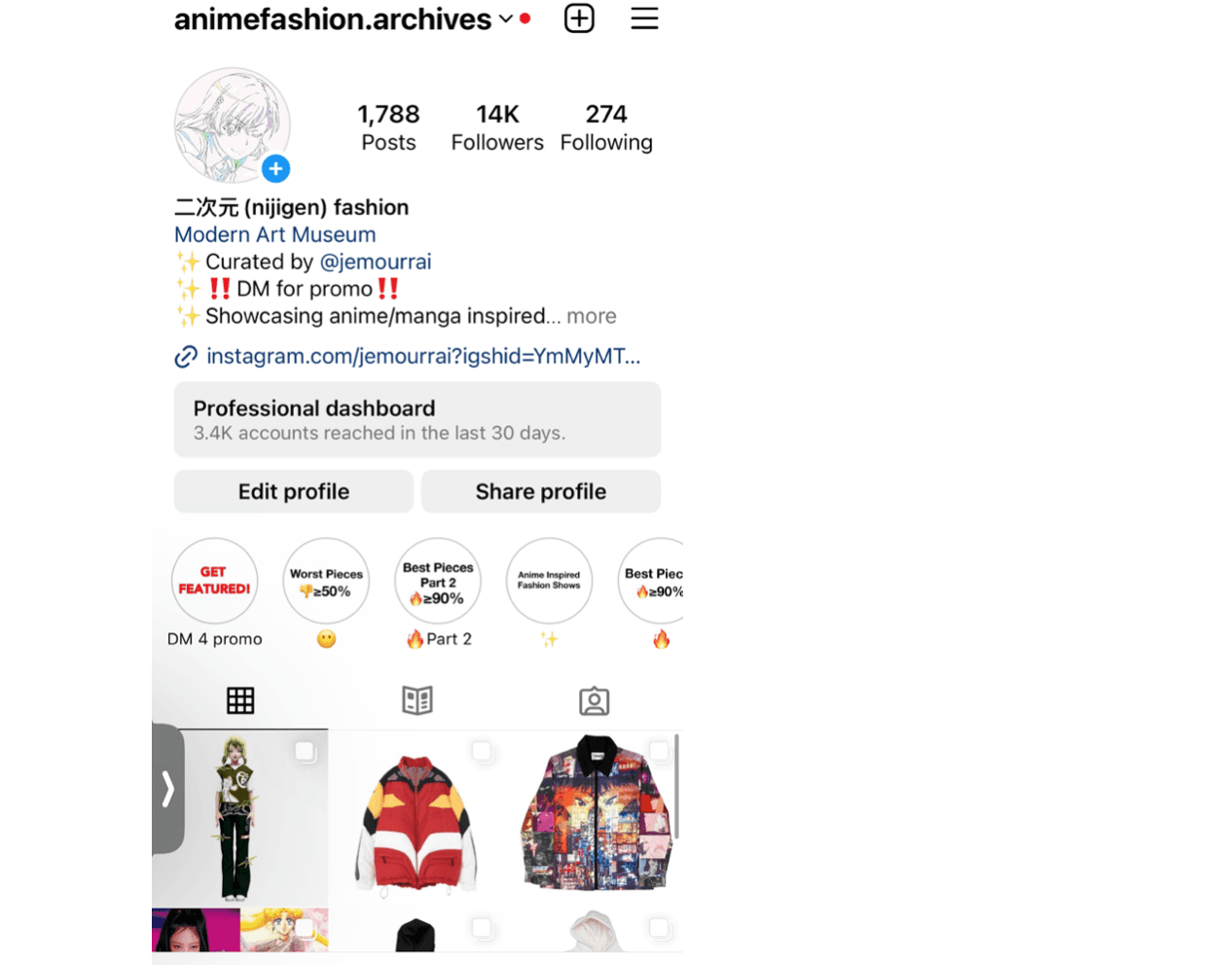
Fig. 1: Screenshot of @animefashion.archives
Moreover, the intersection of Nijigen fashion and its influence on societal norms, particularly regarding gender and sexuality, as explored by Monteiro's research findings in Portugal, accentuates the evolving perspectives within anime and manga communities and enriches the understanding of the profound cultural impact observed in Sushmita Jha's analysis of anime's surge during the pandemic. Nijigen fashion has an impact on gender and sexuality, with an emphasis on the research findings of Monteiro, found in Portugal. To comprehend the changing views of followers, one must first understand the intricate relationship between social conventions and fashion on these platforms, particularly regarding the humorous use of gender-bending. Through the use of interview extracts, it reveals how people in Japan perceive and respond to gender issues in anime and manga, and it highlights how these depictions are relevant to Japanese culture.
The exploration of Nijigen fashion's societal impact, particularly on gender and sexuality through Monteiro's research, intertwines with the transformative potential of participatory media in fashion archives, as Minh-Ha T. Pham elaborates in "Of Another Fashion." The article offers a holistic view of how digital curation mirrors and shapes cultural narratives within both anime communities and fashion-archiving platforms. It illustrates the transformative power of participatory media in reshaping fashion history and archiving, a narrative echoed in the curatorship on social media. Minh-Ha T. Pham's analysis discusses interactive media and digital clothing archives. The conversation centers on the value of these venues for archiving and reinventing fashion history, especially those that conventional institutions still need to pay attention to. Highlighting these archives' collaborative and ever-changing character, the project is shaped by the ongoing audience participation. This deftly incorporates the author's experiences as an Instagram archive page curator, drawing comparisons between the archives of famous fashion brands and those of more specialized sites like @animefashion.archives.
Chapter 2: Trends of Nijigen Fashion
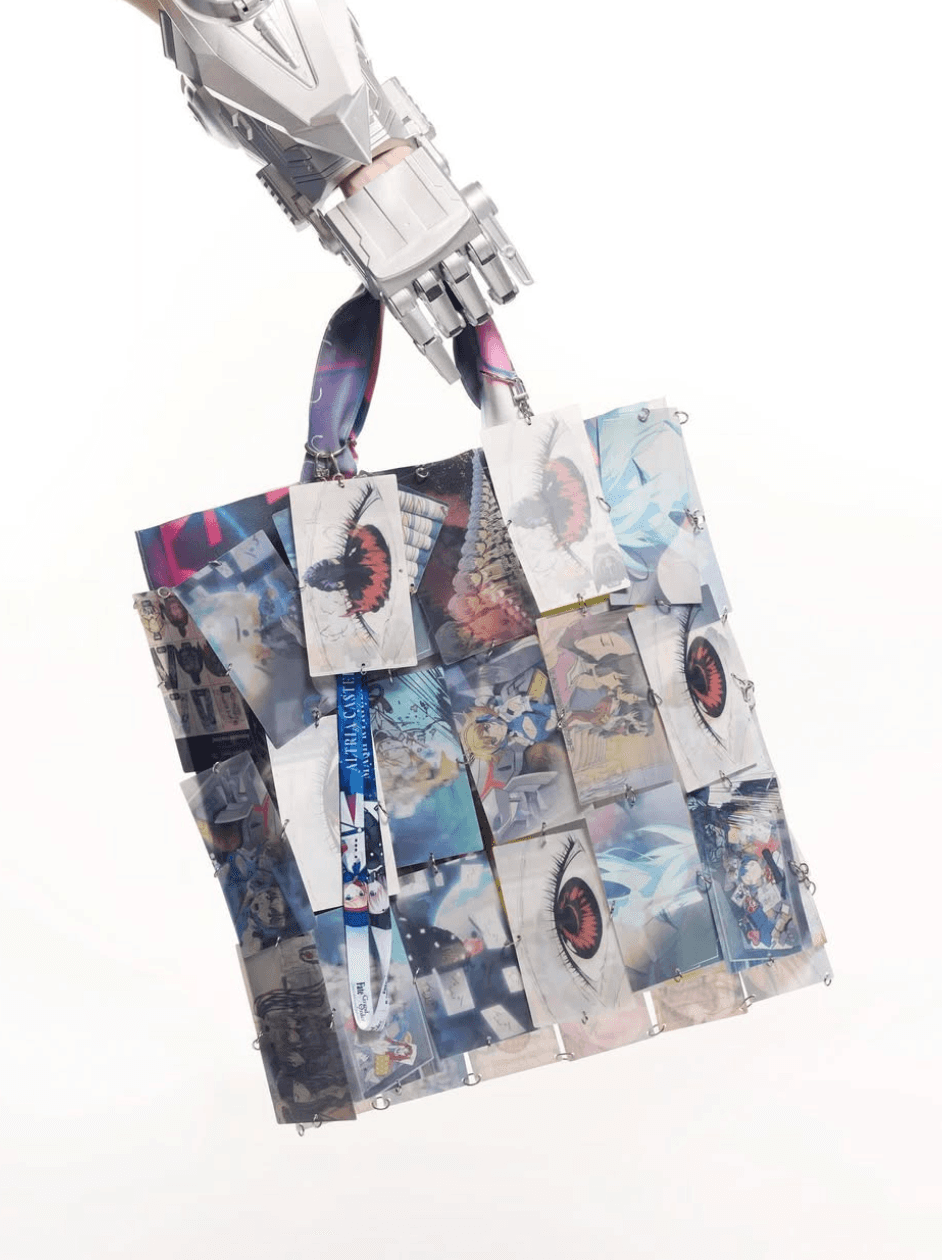
Various trends of Nijigen fashion delve into the expressive world of Otaku fandom, examining the Japanese trend of "ita-bags” along the way. This trend is also known as “painful bags. “It’s a way for otaku to express their fandom for anime, manga, and video games. Similar to "Itasha" for cars, ita-bags involve decorating bags with character badges and buttons, often spending a significant amount of money to do so. Some of these items are limited edition and only available at special events, making it an expensive way to show love for a particular character or series. Ashcraft's research analyzes the cultural phenomena of fans decorating their bags with buttons and badges representing their favorite anime, manga, & video game characters as an expensive but meaningful way to show their love for these mediums . It demonstrates the monetary and emotional investments using quotations and data. The fact that this trend has persisted from its 2015 inception to the present is evidence of its lasting impact on anime fashion.
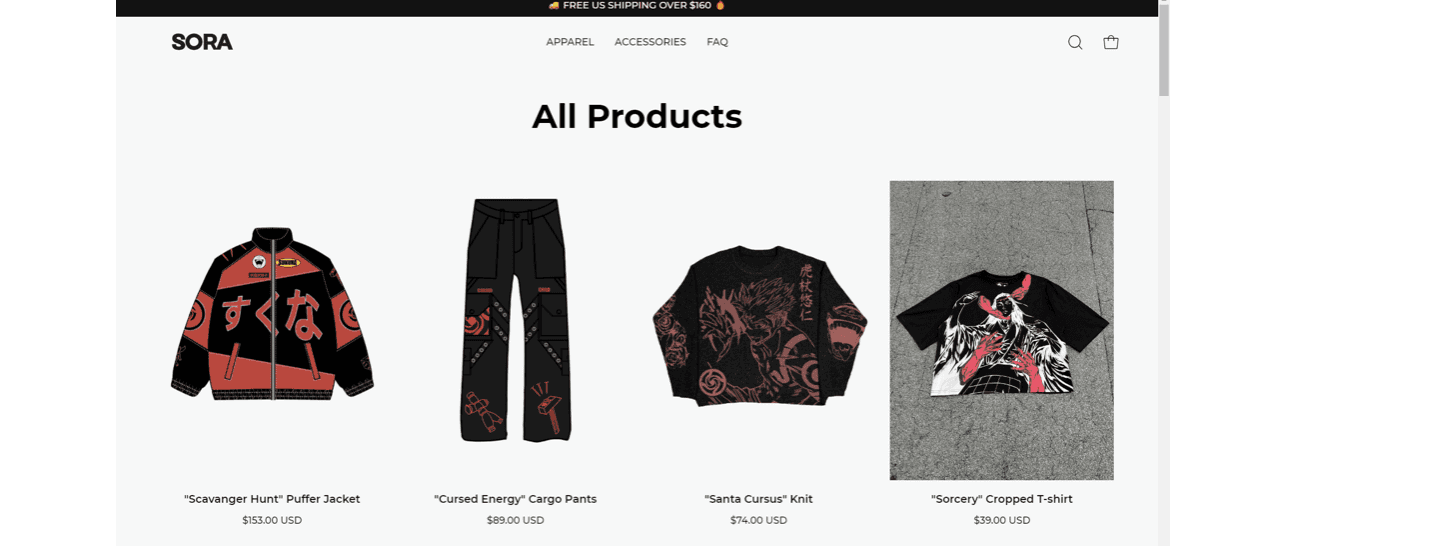
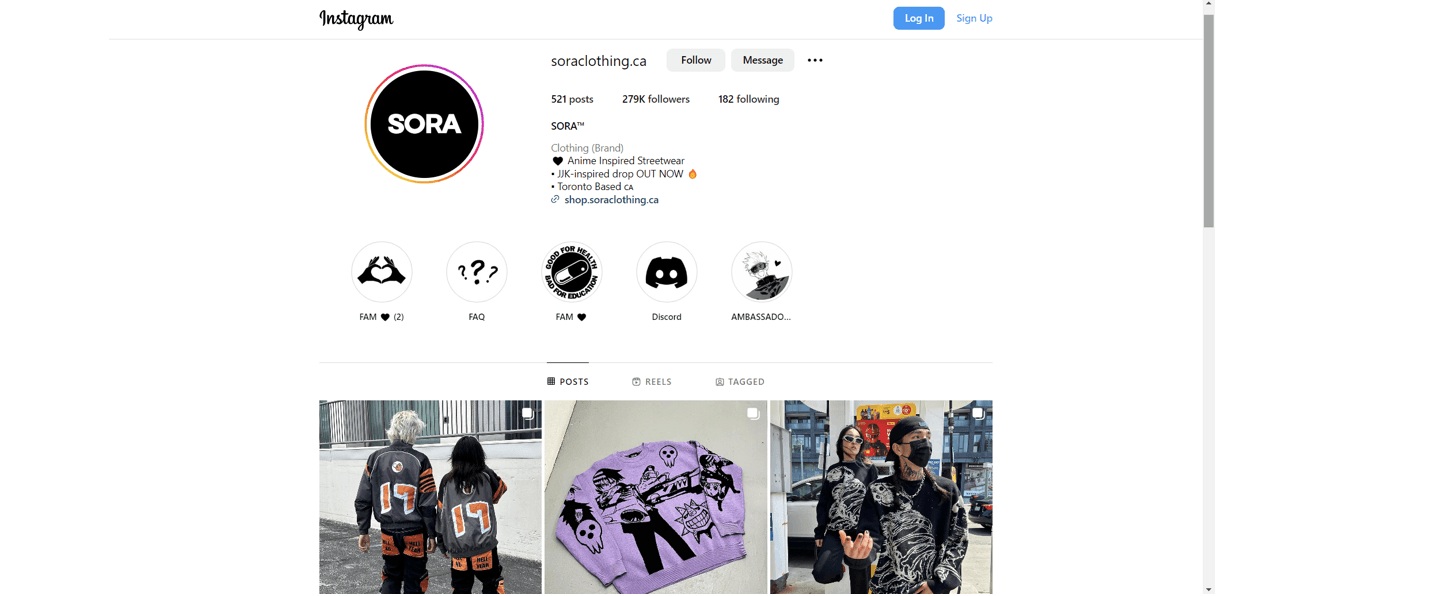
Fig. 2 & 3: Screenshots of SORA Clothing’s website and Instagram page
Anime fans would dress like characters they admired or stories from the shows they loved, which is called cosplay. Expanding on the worldwide cosplay trend, it explores the work of Koya Tango et al. on image-to-image translation as it pertains to creating cosplay costumes inspired by anime characters. It discusses the evolution of cosplay and its influence on the fashion world. The analysis focuses on how image-to-image translation algorithms enhance the quality and consistency of produced cosplay garment pictures, specifically how they can bridge the gap between anime character images and actual apparel. It uncovers the transformational potential of cosplay to bring anime style into reality by drawing on pertinent quotations and facts.
Chapter 3: Interview with Xinzhi Chen
The complex structure of Nijigen fashion was revealed through an in-person interview with Xinzhi Chen, who is a fashion design student and anime fan. Xinzhi Chen offered insightful commentary in the interview regarding the crossover between anime and fashion. Xinzhi claims two primary thoughts regarding Nijigen fashion: one that includes brand partnerships aimed at anime fans and another that is more underground and centered on subcultures and unique interests that cater to subcultures and brand partnerships that cater to anime fans. Xinzhi also said there is a sizable market for Nijigen fashion, which is popular among anime enthusiasts. Nevertheless, a fascinating detail became apparent - a trend towards more understated anime-themed apparel to evade the clichéd description of an "Otaku", which is a term describing people who watch anime and manga and never go out. This realization aligns with how the anime community views fashion as it changes. This demonstrates a complex balancing act between individuality and social norms and an effort to be more inclusive. In addition, the interview covered the complexities of collaborations between anime and luxury companies. Xinzhi stressed that the partnership can reach out to logo- and aesthetics-loving brand followers and anime enthusiasts. When this happens, anime is more of a decorative flourish than a significant selling point.
The interview provides a complex picture in which anime influences not just entertainment but also consumer behavior and fashion choices. To better understand the variety of Nijigen fashion, Xinzhi classifies it as an underground style that focuses on subcultures and brand partnerships. According to Xinzhi, as mentioned in the interview, the need for more understated anime-themed apparel shows that the anime fashion community is trying to fit in with society's labels and has developed its sense of style. Nijigen fashion becomes more intricate when luxury brands collaborate. Rather than seeing Nijigen fashion as a fringe interest, it reveals a market in which anime is used as a design element.
Chapter 4: Academic Journal about @animefashion.archives Written by a Follower
The academic journal “#anime fashion: an ethnography of the intersections between fashion and the world of Japanese pop culture on the social network Instagram” was written in French by Harena, a follower of @animefashion.archive on Instagram, for her fashion history school project. 2 years ago, Harena directly messaged @animefashion.archive on Instagram and asked a lot of interview questions about the account and why it was focused on anime fashion. This article is about the 2 interviews she did with @animefashion.archive and another Instagram account featuring anime screenshots. The critical aspect of Harena’s research process is analyzing social media, especially Nijigen fashion archive accounts on Instagram.
Harena's in-depth study, focusing on the social media dynamics within Nijigen fashion archives, delves into a comprehensive analysis of audience engagement and digital marketing strategies employed by @animefashion.archives. It shows the intricate interplay between digital culture and promotional dynamics in the realm of anime fashion. Her study shows a qualitative and quantitative analysis of audience engagement patterns, interactions, and the impact of comments on the posts of @animefashion.archives. She uncovered the participative character of online communities in the anime fashion realm by examining the digital imprints left by followers and fans. In addition, the background and preparatory material on the advertising techniques of @animefashion.archives provides insights into how anime fashion fits into the larger framework of modern fashion culture. Her journal provides a theoretical grounding in the promotional dynamics seen in digital style archives via this component's integration of digital marketing with social media analytics training.
Chapter 5: Investigations of Nijigen Fashion Brand SORA Apparel
As part of the more extensive investigation of anime's social and cultural effects on modern fashion, this chapter delves into an analysis of SORA Clothing. The use of observational research on SORA clothes, an online fashion retailer specializing in anime-themed items, broadens the scope of the study. The website design, product diversity, and online social media presence highlight the importance of online spaces in fostering fan communities. The investigation of the online reviews of their products concludes with a look at the devoted fan base. It can be inferred that they emphasize user participation and the significance of apparel in developing individuality online. It shows how online communities and e-commerce platforms can serve as hubs for like-minded individuals who share a passion for a particular interest, in this case, anime characters printed on garments.
The exploration of SORA Clothing's online presence and product layout demonstrates the intricate dynamics of anime fashion consumption within digital marketplaces and unveils the intersection of e-commerce platforms, visual display, and community-building potential in shaping the cultural relevance of anime-inspired apparel in online spaces. The site structure, content organization, & product diversity were all thoroughly examined. Based on the visual analysis of their product layout and designs, their website acts as a representation of the consumption of anime fashion in online malls. Considerations such as the website's visual attractiveness and ease of use, the effect of product structure on user conduct, and the community-building potential of a social networking presence are all part of the examination. It shows the complex interplay of internet platforms, buying habits, and the cultural relevance of anime fashion by stepping into the virtual world created by SORA apparel.
Conclusion
The investigation into the many facets of Nijigen fashion uncovered complex relationships between manga, anime, and modern style. Cosplay, image-to-image translating, and dynamic gender depictions in manga and anime are just a few aspects that add complexity to the scene. The substantial influence of participatory media formats and the expressive potential of ita-bags add weight to the claims that Japanese pop culture has had a significant effect on fashion narratives. The significance of user participation and individual expression in determining fashion trends was highlighted by examining SORA Clothing, which offered concrete insights into the internet fashion community.
The ever-changing nature of Nijigen fashion, where fandom meets creativity and expression, is brought to light via the exploration of the genre. Beyond traditional limits, the convergence of anime and fashion shapes identities and cultivates inclusive communities. By demonstrating the significance of community-driven narratives in fashion preservation, the success of participatory media platforms signifies a paradigm shift. The community of Nijigen fashion, including the platform @animefashion.archives becomes a fusion of creativity and fandom. They shape not only identities but also foster inclusive communities, transcending underground trends and underlining the influence of Japanese subculture in the realm of fashion.
Possible directions for future study with additional research are needed to delve into the ever-changing dynamics of representations in Nijigen fashion and its community. The revolutionary potential of image-to-image translation provides a new method to design Nijigen apparel, and the ita-bag trends both have sustainability and long-term effects. Furthermore, there is potential for future research on the impact of digital-style archives on specialized groups and their changing roles, with the opportunities for comprehending the changing terrain of digital fashion recordkeeping through the interaction between popular fashion archiving practices and online platforms such as @animefashion.archives.
Editorial & Review Credits
Editor-in-Chief: Elizaveta Akimova
Author: Xijia Cheng
Peer Review Board:
Anna Zhang (MFA (Parsons School of Design), multi-award-winning fashion designer (MUSE Gold, French Fashion Platinum), and member of the China Fashion Association.): "Xijia Cheng’s article offers a thoughtful examination of how anime-inspired aesthetics have evolved from niche fan practices into a dynamic field within contemporary fashion culture. By combining digital ethnography with the case study of @animefashion.archives, the work highlights how online communities actively document, shape, and circulate subcultural fashion narratives. The research provides valuable insight into how participatory digital platforms are redefining fashion archives and expanding the cultural legitimacy of anime-influenced design."
Olga Bondarenko (Award-winning designer and photographer (CAPIC, APA), Graphic Design degree (KSADA), Juno Awards photography team, and experienced art curator.): "Part of the relevance of this piece lies in the context of ever changing trends in self-expression and how the society treats sexuality. Personally, I found the angle where the author expands on how the influence of anime spans beyond the realm of animated work to be important for understanding in the contemporary world. With social media, the trend definitely influences far and wide outside of it’s country of origin."
Research Context & Expert References
Selected Bibliography & Academic Sources:
Jha, Sushmita. "Pandemic Leads to a Rise in the Number of Gen Z Anime Fans MORAL SUPPORT AMID THE PANDEMIC ANIME-INSPIRED MAKEUP AND FASHION [Hyderabad Times]." The Times of India (Online) Sep 19 2021 ProQuest. 24 Sep. 2023
Monteiro, Núria Augusta Venâncio. "GENDER BENDING IN ANIME, MANGA, VISUAL KEI AND LOLITA FASHION: Representations from Portugal/GÉNERO FLEXIBLE EN ANIME, MANGA, VISUAL KEI Y MODA LOLITA: Representaciones Desde Portugal."
Tango, Koya, et al. "Anime-to-Real Clothing: Cosplay Costume Generation Via Image-to-Image Translation." Multimedia Tools and Applications 81.20 (2022): 29505-23. ProQuest. 24 Sep. 2023
Pham, Minh-Ha T. "Archival Intimacies: Participatory Media and the Fashion Histories of US Women of Colour." Fashion, Style & Popular Culture 2, no. 1 (2015), 107-122
Ashcraft, B. Trend for female geeks: “Painful” anime bags. Kotaku. 2018, September 27. https://kotaku.com/trend-for-female-geeks-painful-anime-bags-1696146577
Raveloarison, Harena. “#anime fashion : ethnographie des intersections entre la mode et l’univers de la pop culture japonaise sur le réseau social Instagram”, June 24, 2021.
Interview with Xinzhi Chen, October 24, 2023
Vol. 1, Issue 1 (2026)
This article has undergone an editorial peer review process by members of the Curatone.art Editorial Board.
How to cite: Xijia Cheng (2026). Nijigen Fashion and @animefashion.archives. Curatone Art & Research Journal, 1(1). Retrieved from https://curatone.art/publications/nijigen-fashion-and-animefashion

Featured Artists
We provide media exposure on Curatone.art and across social media for selected finalists and winners