Expert Insight
Expert Insight: Natalia Yuresko-Bilous on Classical Traditions, Educational
Leadership, and Artistic Adaptation
Curatone Art & Research Journal, Vol. 1, Issue 1 (2026)
Received: April 26, 2026
Accepted: May 3, 2026
Published: May 5, 2026
Keywords: Visual Arts, Classical Realism, Art Pedagogy, Cultural Entrepreneurship, Landscape Painting, Mural Art, International Art Market, Mentorship.
Abstract: This interview documents the professional journey of Natalia Yuresko-Bilous, spanning over 25 years of creative and pedagogical practice. It focuses on the synthesis of classical artistic genres and entrepreneurial activity within the art education sector. The interview analyzes the influence of cultural heritage on the formation of an authorial style and explores the process of an artist’s adaptation to the international art market under conditions of relocation.
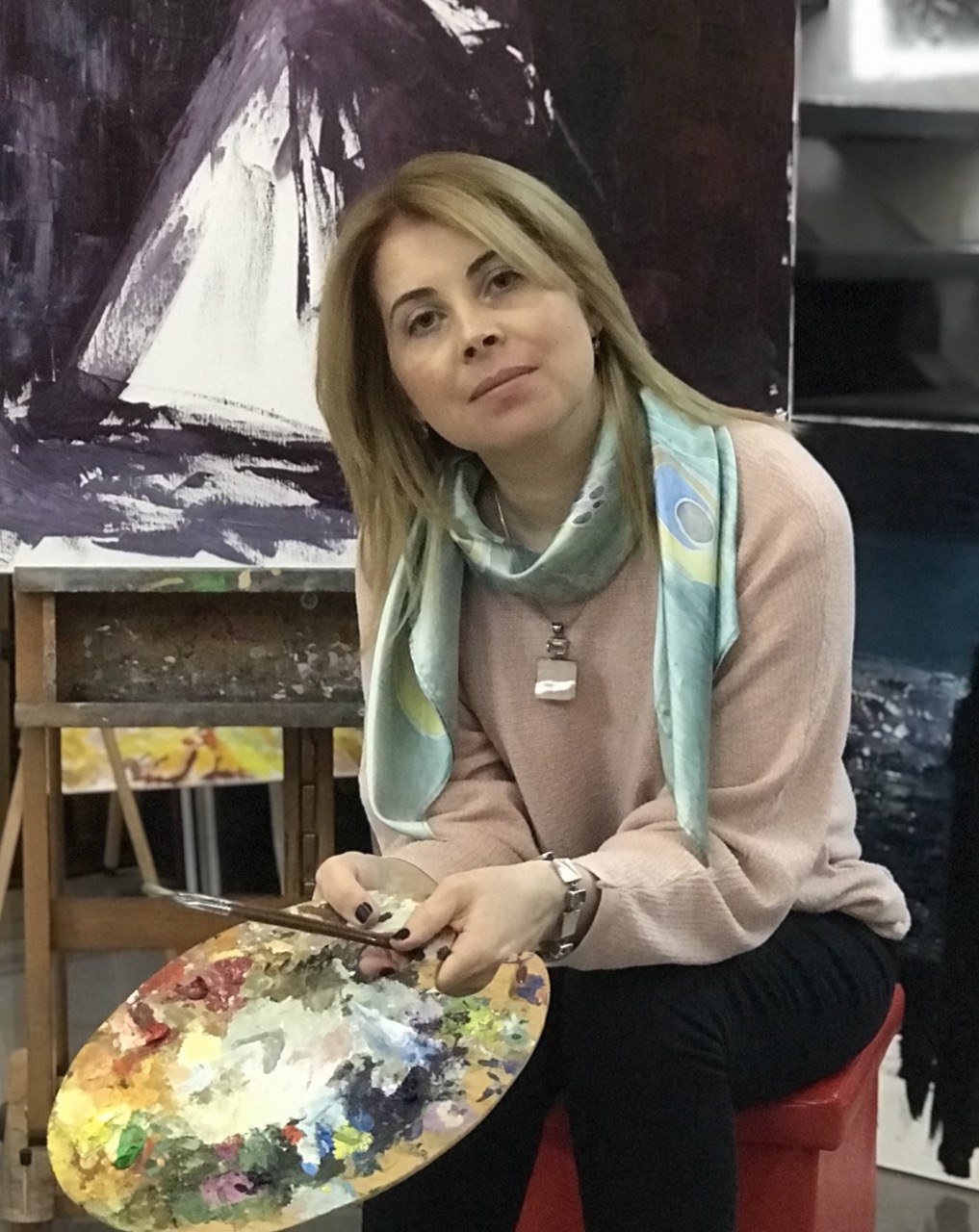
As part of Curatone.art’s research project, we feature Natalia Yuresko-Bilous - a professional artist, educator, and academic researcher with over 25 years of experience in classical fine arts. This interview explores how deep academic foundations, pedagogical leadership, and the mastery of classical traditions define the role of a contemporary artist in a globalized society.
Expert Biography
Natalia Yuresko-Bilous is a professional artist, educator, and academic researcher with profound expertise in classical painting. Holding a Master’s degree in Fine Arts and Teaching from the South Ukrainian National Pedagogical University, she has dedicated her career to developing art institutions in both Ukraine and the USA. Natalia is a member of prestigious organizations, including the Nashua Area Artists Association (NAAA) and the Hollis Arts Association. Her works, covering the genres of landscape, still life, and mural painting, are held in private collections worldwide.
Selected for the Curatone Annual Review 2026 (Academic Print & Digital Edition).
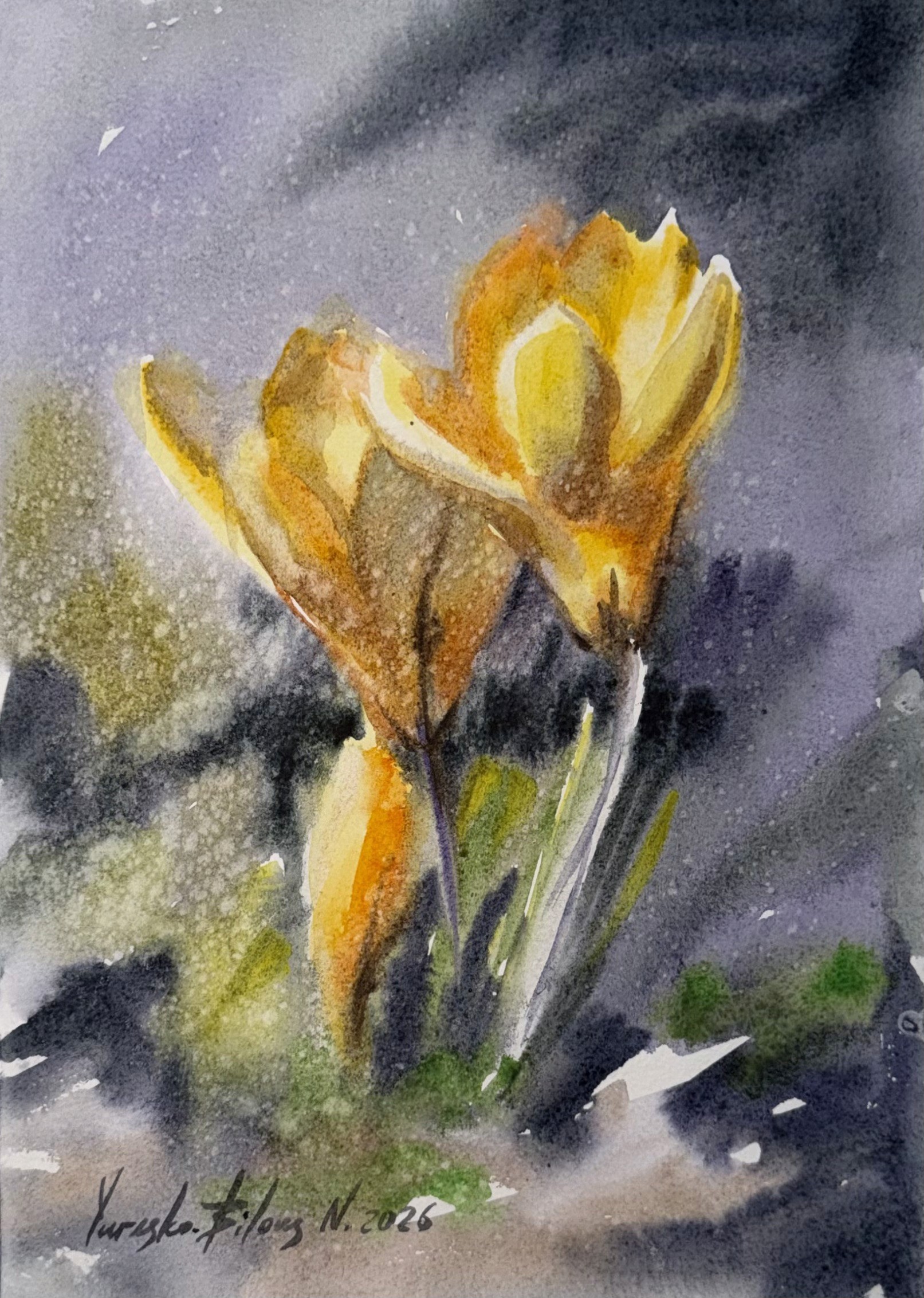
Crocuses. Watercolor, 2026
Natalia, your development as an artist is inextricably linked to the ancient history of your hometown, Bilhorod-Dnistrovskyi, and its famous 13th-century fortress. How did these monumental architectural forms and the natural landscape of the Dniester delta influence your perception of space and composition in painting?
Growing up in my hometown, surrounded by rich history and beautiful landscapes, has deeply shaped my artistic voice. Everything around me naturally found its way onto my canvas.
Family. Oil on board, 2007
You hold a Master’s degree in art and teaching and have years of experience managing your own art schools. How does this academic background assist you in structuring the creative process, and how does teaching young talents enrich your own personal artistic practice?
Academic training brings confidence to the creative process. In my experience, once students master the fundamentals, they gain true freedom—using their tools with intention and courage to express their ideas. Just as importantly, learning together creates a space for exchanging ideas and inspiring one another along the way.
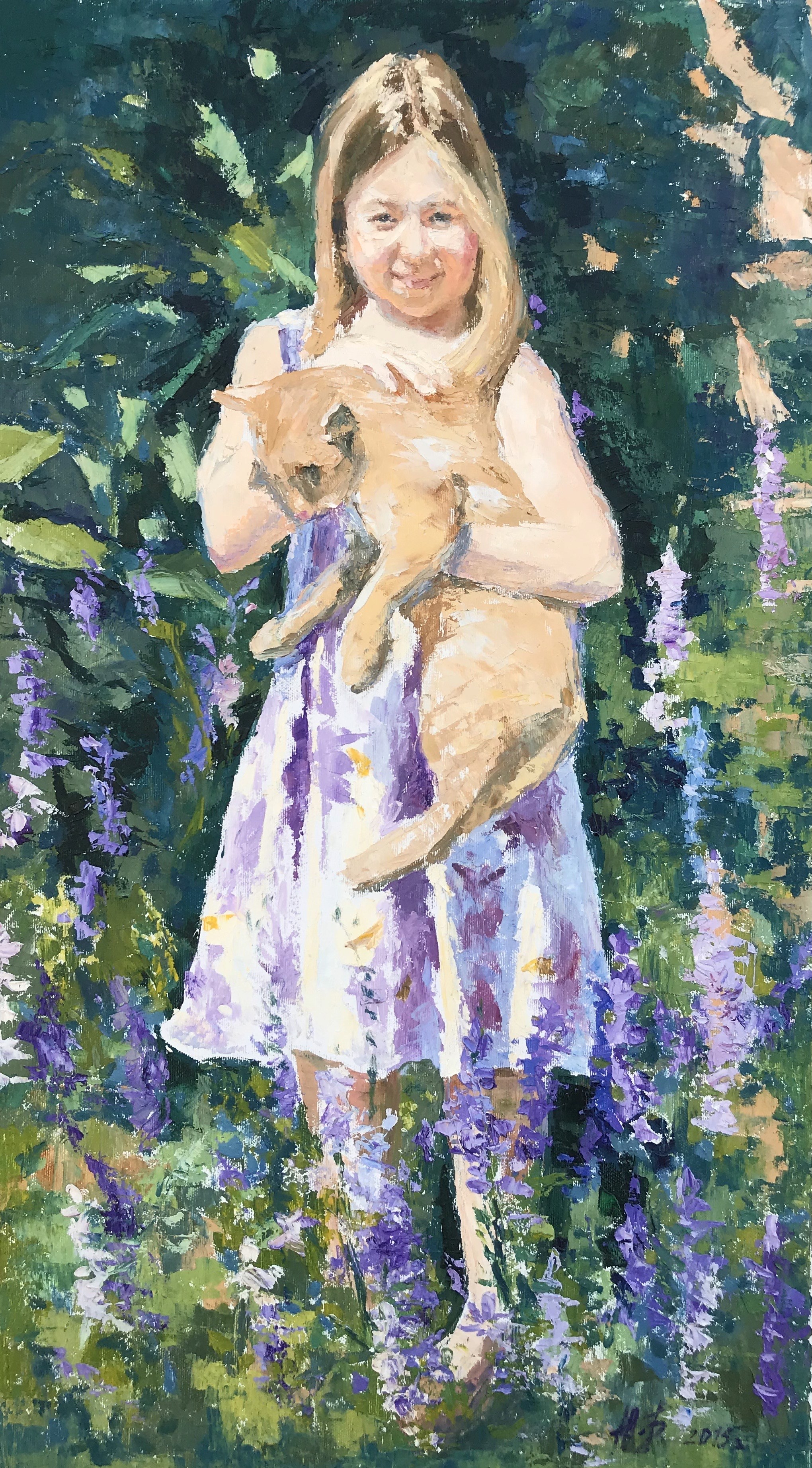
Daughter Anastasiia. Oil on canvas, 2015
Your portfolio includes intimate still lifes and portraits as well as large-scale murals. Does working on monumental objects require a different philosophical approach compared to traditional easel painting, and how do you find the balance between these formats?
Working on murals and bas-reliefs allows me to feel an even greater sense of creative freedom. It’s not the scale that defines this experience, but the power and subtlety of monochrome.
In 2022, your career took a new turn with your move to the USA, where you successfully integrated into the local art community. What challenges does a professional artist face when entering a new international market, and how does a change in cultural context affect the themes of your work?
Moving to another country and connecting with artists from different backgrounds opened an entirely new world for me. Becoming part of this artistic community required dedication — organizing exhibitions, staying actively involved — and everything around me began to influence the themes and direction of my work.
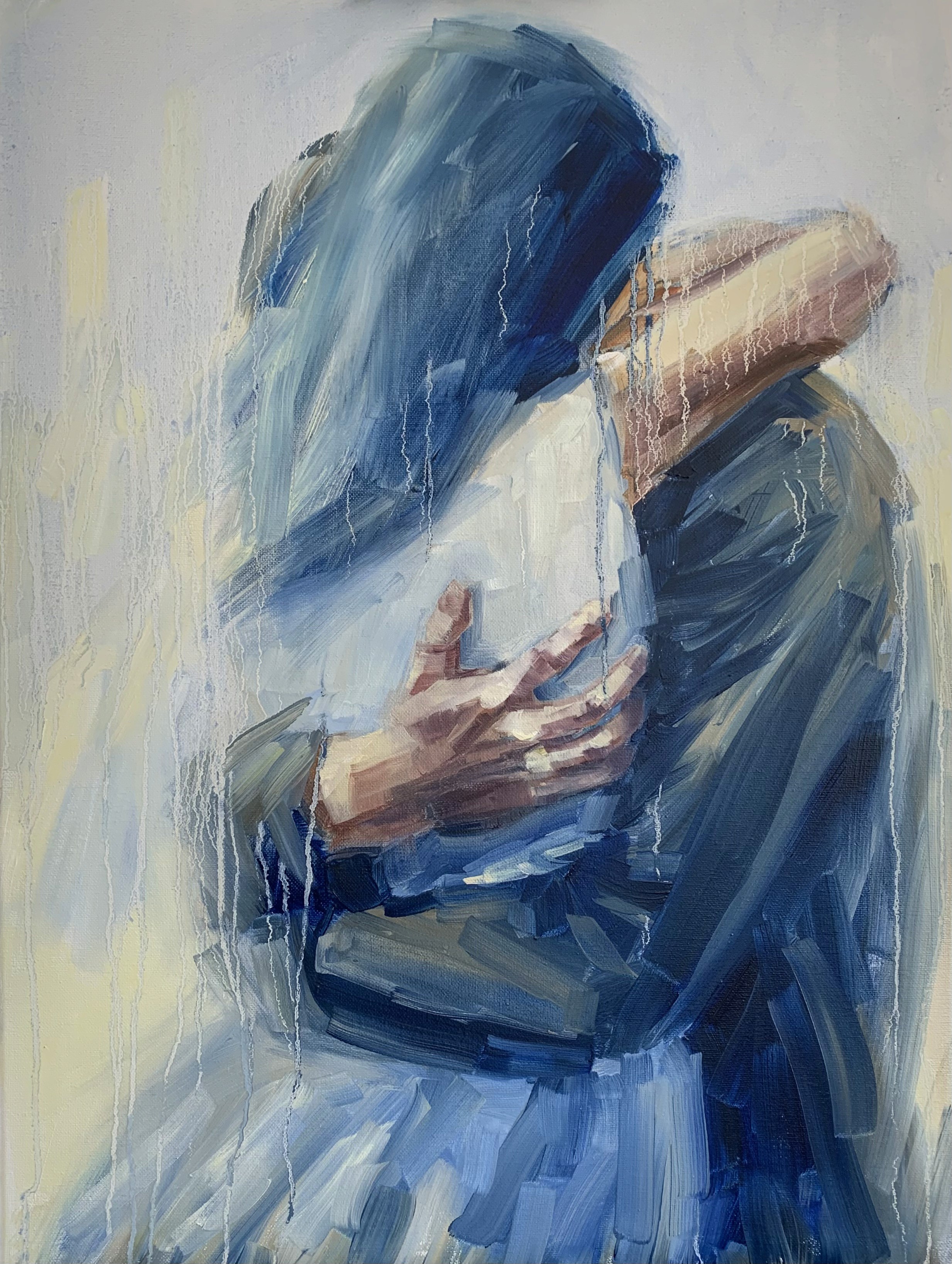
Dream. Oil on canvas, 2022
You were successfully juried into the prestigious NAAA Cleary Exhibition in the United States. In your opinion, what role do professional associations and participation in juried exhibitions play in validating an artist’s status on the world stage today?
Being invited to participate in exhibitions like these is always an honor. I believe that being part of an artistic association plays an important role, often opening doors to international exhibition opportunities.
As a member of the Jury Board for the "Inner Landscapes" project, you analyzed numerous international submissions. What criteria did you find most important when evaluating works that aim to depict the subconscious or "internal" world through classical or contemporary techniques?
Ultimately, the most important criterion in evaluating art is its ability to evoke and convey emotion.
Editorial & Review Credits
Interviewed by Elizaveta Akimova, Curatone.art Project Director
Featured Expert: Natalia Yuresko-Bilous
Editor: Irina Naumycheva (Miami, USA) Art strategist and award-winning designer. Irina is a recipient of the Presidential Award and an expert juror for international platforms, including Apexart (USA). She is the author of the AI-Art & Design Flow methodology, specializing in the integration of AI in contemporary creative processes.
This article has undergone an editorial peer review process by members of the Curatone.art Editorial Board.
How to cite: Yuresko-Bilous, N. (2026). Natalia Yuresko-Bilous on Classical Traditions and Artistic Adaptation. Curatone Art & Research Journal, 1(1). Retrieved from https://curatone.art/publications/summer-roshni-bhullar
Research Context & Expert References
This interview is a foundational part of Curatone.art’s ongoing research project: "The Impact of Contemporary Art and Design on Global Social Structures." Our research explores how artistic practices evolve into tools for social and environmental change. By documenting the insights of experts like Natalia Yuresko-Bilous, Curatone.art aims to map the intersection of creative excellence and professional responsibility in the 21st century
Selected Bibliography & Academic Sources:
Arnheim, R. (1974). Art and Visual Perception: A Psychology of the Creative Eye. University of California Press.
UNESCO. (2023). The Status of the Artist: Global Report on the Socio-Economic Conditions of Artistic Professionals.
Gardner, H. (1990). Art Education and Human Development. Getty Publications.
Nashua Area Artists Association. (n.d.). "The NAAA Cleary Exhibition: History and Professional Standards." https://www.nashuaareaartistsassociation.org/
Vol. 1, Issue 1 (2026)
DOI: https://doi.org/10.5281/zenodo.20358544

Featured Artists
We provide media exposure on Curatone.art and across social media for selected finalists and winners